
Modern workplaces are becoming increasingly focused on employee comfort, productivity, and collaboration. As open-plan layouts, glass partitions, and minimalist interior designs continue to dominate office architecture, noise control has become a serious concern for businesses of all sizes.
To solve this issue, many companies invest in office acoustic panels to reduce echo, improve speech clarity, and create a more comfortable working environment. However, simply purchasing acoustic panels does not guarantee effective noise reduction. In many cases, businesses spend significant amounts on acoustic treatment only to discover that the office still sounds noisy and distracting.
Why does this happen?
The answer often lies in installation mistakes. Even high-quality acoustic panels can perform poorly if they are incorrectly selected, improperly positioned, or insufficiently integrated into the office design.
In this article, we’ll explore the most common mistakes when installing office acoustic panels and explain how to avoid them for the best possible acoustic performance.
Why Proper Acoustic Panel Installation Matters
Before discussing the mistakes, it’s important to understand why installation quality plays such a critical role.
Office acoustic panels are designed to absorb reflected sound waves. Their main purpose is to reduce reverberation and echo inside a room, making conversations clearer and reducing background noise buildup.
However, acoustic treatment is not just about attaching panels to walls. Effective sound control depends on:
Correct panel placement
Adequate coverage area
Proper panel type selection
Room acoustics
Ceiling treatment
Surface materials
Without a strategic installation plan, even expensive acoustic products may deliver disappointing results.
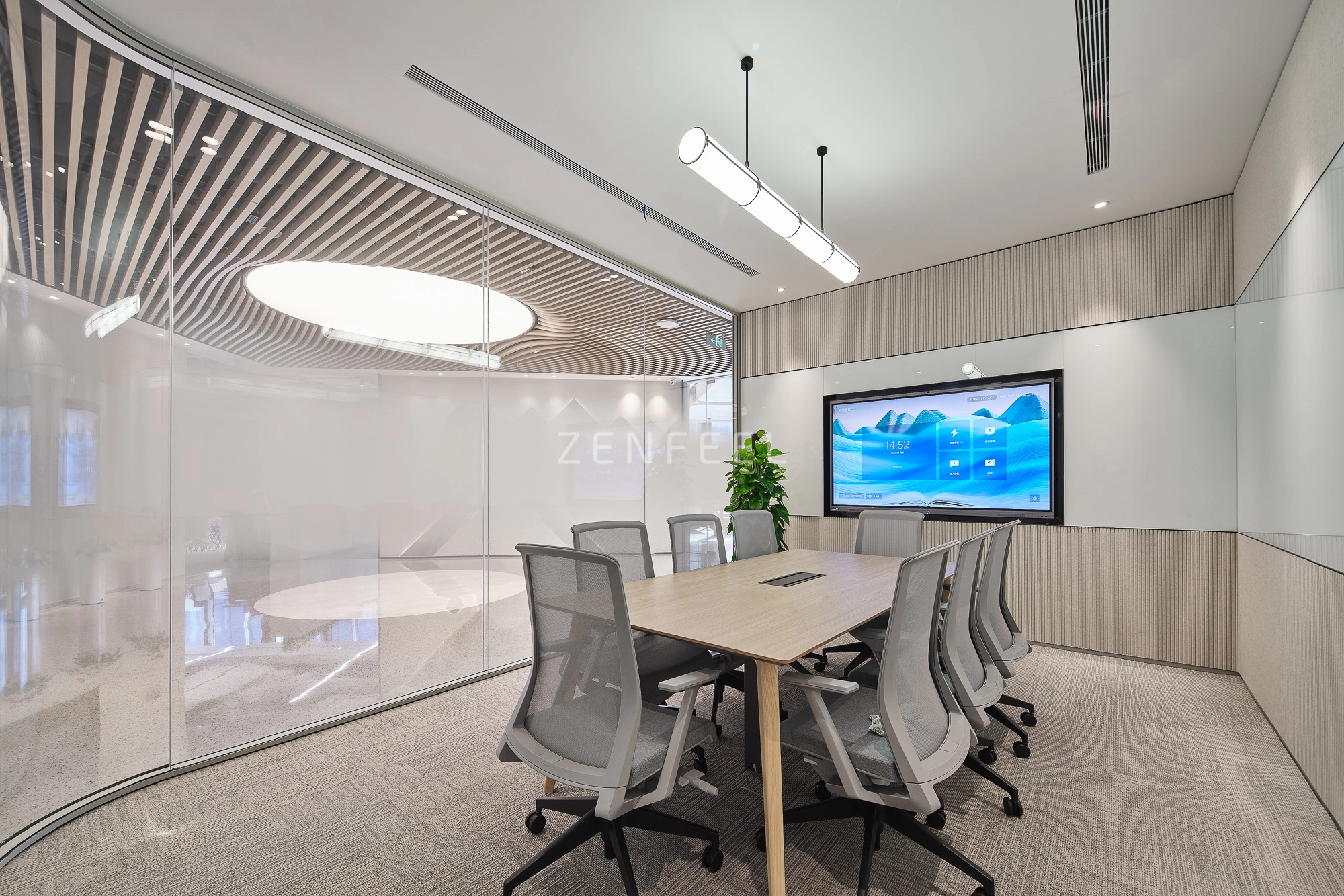
Mistake 1: Confusing Acoustic Panels with Soundproofing
One of the biggest misconceptions is believing that acoustic panels completely block sound.
In reality, sound absorbing office panels are designed to improve sound quality within a room, not stop sound transmission between spaces.
What Acoustic Panels Actually Do
Reduce echo
Absorb reflected sound
Improve speech clarity
Lower reverberation time
What They Do Not Do
Prevent external noise from entering
Fully block conversations between rooms
Eliminate all office noise
If your office suffers from traffic noise, noisy HVAC systems, or sound leakage through walls, additional soundproofing solutions are necessary.
Mistake 2: Installing Too Few Acoustic Panels
Many offices install only a small number of decorative panels and expect dramatic results.
Unfortunately, insufficient acoustic coverage is one of the most common reasons offices remain noisy.
Why Coverage Matters
Sound reflects across:
Walls
Ceilings
Glass surfaces
Floors
Furniture
If only a tiny portion of these surfaces is treated, sound reflections will continue dominating the space.
Recommended Coverage
Most offices require acoustic treatment covering approximately:
20–40% of the total surface area
The exact amount depends on:
Room size
Ceiling height
Occupancy levels
Noise intensity
Installing too few panels significantly limits acoustic effectiveness.
Mistake 3: Poor Placement of Office Acoustic Panels
Even high-quality wall acoustic panels for offices can fail if they are placed incorrectly.
Common Placement Errors
Mounting panels too high
Concentrating panels on one wall only
Prioritizing aesthetics over acoustics
Ignoring reflection points
Understanding Reflection Points
Sound waves bounce off hard surfaces before reaching listeners. The first surfaces sound hits are called “first reflection points,” and these areas are critical for acoustic treatment.
Important Treatment Areas
Walls opposite workstations
Meeting room sidewalls
Ceiling areas above desks
Shared collaboration zones
Strategic placement is often more important than simply increasing panel quantity.
Mistake 4: Ignoring Ceiling Acoustics
One of the most overlooked areas in office acoustics is the ceiling.
In open-plan offices especially, ceilings act as massive reflective surfaces that spread sound throughout the workspace.
Why Ceiling Treatment Matters
Even with effective wall-mounted acoustic panels, untreated ceilings can still cause:
Long reverberation times
Speech overlap
Noise spreading across departments
Effective Ceiling Solutions
Acoustic ceiling clouds
Hanging baffles
Acoustic ceiling tiles
Combining wall and ceiling treatments creates far better results than wall panels alone.
Mistake 5: Choosing the Wrong Acoustic Panel Type
Not all acoustic panels are suitable for every office environment.
Different spaces generate different sound frequencies and acoustic challenges.
Common Types of Office Acoustic Panels
Fabric-wrapped fiberglass panels
Polyester acoustic panels
Foam sound panels
Wooden slatted acoustic panels
Common Selection Mistakes
Choosing decorative panels with low absorption performance
Using thin panels in large spaces
Ignoring NRC ratings
The Noise Reduction Coefficient (NRC) measures how effectively a panel absorbs sound. Higher NRC ratings generally provide better performance.
Selecting the right panel material and thickness is essential for effective office noise reduction.
Mistake 6: Ignoring the Office Layout
Every office layout behaves differently acoustically.
Open Offices
Open-plan spaces often require:
More acoustic panels
Ceiling treatment
Acoustic desk dividers
Sound masking systems
Conference Rooms
Meeting rooms benefit from balanced sound absorption to improve speech clarity without making the room sound unnatural.
Private Offices
Smaller enclosed offices typically require less acoustic treatment.
Using the same acoustic strategy for every space often leads to poor results.
Mistake 7: Failing to Address Reflective Surfaces
Even well-installed office wall acoustic panels may struggle in environments dominated by hard materials.
Highly Reflective Office Materials
Glass walls
Concrete flooring
Metal furniture
Stone surfaces
These materials continuously reflect sound waves, increasing noise levels.
Supporting Acoustic Improvements
To improve overall performance, combine acoustic panels with:
Carpets
Curtains
Upholstered seating
Fabric partitions
Acoustic balance comes from treating the entire environment—not just the walls.
Mistake 8: Uneven Acoustic Distribution
Some offices place all acoustic panels in a single area while leaving other sections untreated.
This creates inconsistent sound control throughout the workspace.
Common Problems
Quiet zones beside noisy zones
Echo concentrated in untreated areas
Uneven speech clarity
Balanced distribution across walls and ceilings ensures more consistent acoustic performance.
Mistake 9: Installing Panels Too Close Together
Another common mistake is clustering all acoustic panels in one location.
While concentrated absorption may reduce sound in one area, it leaves other sections untreated.
Better Approach
Spread panels strategically across:
Multiple walls
Ceiling zones
Shared workspaces
This creates more uniform sound absorption and better overall acoustic balance.
Mistake 10: Ignoring Aesthetic Integration
Some businesses treat acoustic panels purely as technical products without considering office design.
However, modern decorative office acoustic panels can enhance both:
Acoustic performance
Interior aesthetics
Today’s panels are available in:
Custom colors
Printed designs
Geometric shapes
Wood finishes
Integrating acoustic treatment into office design improves employee satisfaction and visual appeal.
Mistake 11: DIY Installation Without Acoustic Planning
Many businesses attempt DIY installation without understanding room acoustics.
While small offices may benefit from basic self-installation, larger commercial spaces often require professional acoustic planning.
Risks of DIY Installation
Incorrect panel quantity
Poor placement
Wasted budget
Limited performance improvement
Professional acoustic assessments help identify:
Reflection points
Reverberation issues
Sound propagation patterns
This leads to more effective and cost-efficient solutions.
Mistake 12: Expecting Instant Silence
Finally, many businesses expect acoustic panels to eliminate all office noise.
This unrealistic expectation often leads to disappointment.
What Acoustic Panels Can Improve
Echo reduction
Speech clarity
Noise comfort
Workplace concentration
What They Cannot Fully Eliminate
Human activity noise
External sound transmission
Structural vibration
Acoustic panels improve the sound environment—they do not create complete silence.
How to Install Office Acoustic Panels Correctly
To maximize performance, businesses should follow several best practices.
1. Conduct an Acoustic Assessment
Evaluate:
Noise sources
Room dimensions
Surface materials
Reverberation levels
2. Combine Wall and Ceiling Treatment
Balanced acoustic treatment provides superior results.
3. Use Proper Coverage Ratios
Treat approximately:
20–40% of the room surface area
4. Choose High-Performance Panels
Look for:
High NRC ratings
Appropriate thickness
Commercial-grade materials
5. Prioritize Strategic Placement
Focus on:
Reflection points
Shared work areas
Meeting spaces
The Long-Term Benefits of Proper Acoustic Installation
Correctly installed commercial office acoustic panels provide significant long-term advantages.
Improved Productivity
Employees can focus better in quieter environments.
Better Communication
Reduced echo improves speech clarity during meetings and calls.
Enhanced Employee Well-Being
Lower noise stress contributes to workplace satisfaction.
Professional Office Atmosphere
Acoustically optimized offices feel more comfortable and organized.
Final Thoughts
Installing office acoustic panels is one of the most effective ways to improve workplace acoustics—but only when done correctly.
From insufficient coverage and poor placement to ignoring ceiling acoustics and selecting the wrong materials, many common mistakes can dramatically reduce acoustic performance.
Businesses should approach acoustic treatment as a complete strategy rather than a decorative afterthought. By combining proper planning, high-quality materials, and strategic installation, companies can create quieter, more productive, and more comfortable office environments.
A well-designed acoustic workspace not only reduces noise—it supports collaboration, concentration, and overall workplace success.
https://www.roydaacoustic.com/news/common-mistakes-when-installing-office-acoustic-panels.html
roydaacoustic