
The rapid expansion of modular interior design has significantly increased demand for furniture board lightweight materials that combine structural stability with installation flexibility.
Unlike traditional fixed furniture structures, modular systems require materials that are easy to transport, fast to assemble, and stable under repeated reconfiguration.
This shift is redefining how furniture boards are engineered at the material and system level.
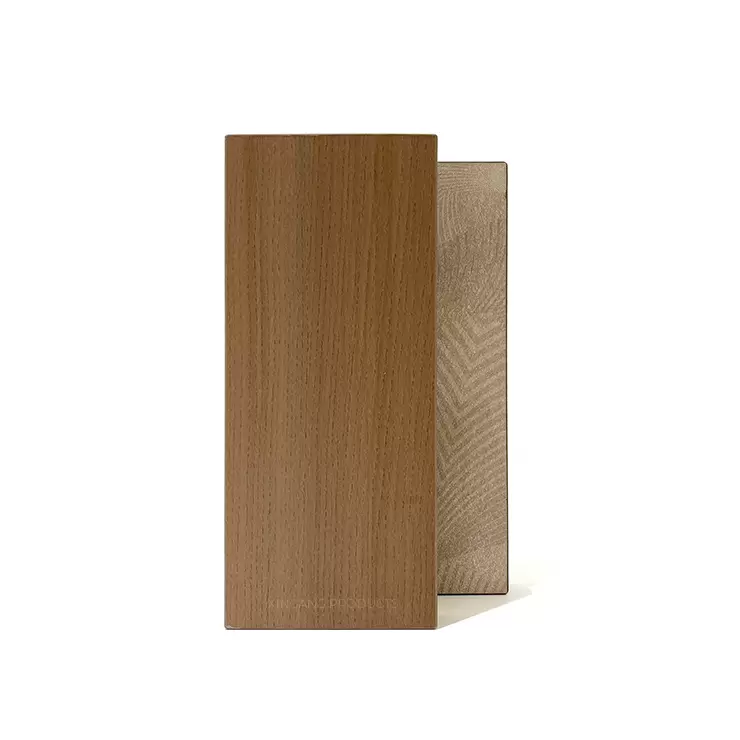
Structural requirements in modular furniture systems
Modular furniture systems introduce unique mechanical requirements:
Reconfigurable load paths
Repeated assembly cycles
Multi-directional stress distribution
To meet these demands, lightweight boards must maintain:
Bending strength ≥20 MPa
Dimensional deviation ≤ ±0.2 mm
Surface durability under repeated fastening cycles
Unlike static furniture applications, modular systems place dynamic stress on board connections, making internal bonding quality critical.
Weight reduction as a system efficiency driver
In modular systems, weight reduction directly affects:
Assembly speed
Structural alignment accuracy
Transportation modularization efficiency
Typical furniture board lightweight systems reduce weight by 15%–35%, allowing:
Faster panel handling during installation
Reduced structural load on supporting frames
Improved scalability in large interior projects
This is particularly important in commercial interior systems such as office partitions, retail modular setups, and prefabricated housing interiors.
Surface performance and finishing compatibility
Furniture boards used in modular systems must support diverse surface finishing techniques:
Lamination
Veneering
Coating systems
Edge banding integration
Surface stability is essential to ensure consistent visual quality after repeated assembly.
Lightweight boards require controlled surface density to prevent:
Coating absorption inconsistency
Edge chipping during processing
Surface deformation under pressure
Manufacturing precision plays a key role in ensuring finishing compatibility.
Environmental material transition in interior systems
Sustainability requirements are increasingly shaping material selection in modular furniture production.
Furniture board lightweight systems using biomimetic adhesives provide:
Zero formaldehyde emission
Reduced VOC output
Improved indoor air quality compliance
This makes them suitable for global markets where environmental certification is mandatory for building materials.
Shandong Xingang Group’s material approach supports this transition by integrating eco-friendly adhesive systems into large-scale industrial production.
Lifecycle efficiency and total cost optimization
Beyond initial production cost, modular systems prioritize lifecycle efficiency.
Key lifecycle benefits of lightweight boards include:
Reduced replacement frequency
Lower transportation energy consumption
Improved installation reuse capability
These factors collectively reduce total cost of ownership in long-term furniture deployment scenarios.
Conclusion: modular systems driving next-generation lightweight board demand
Furniture board lightweight materials are becoming essential components in modular interior systems, where flexibility, efficiency, and sustainability must coexist.
Through controlled structural engineering, precise manufacturing processes, and environmentally responsible adhesive systems, lightweight boards are enabling a new generation of scalable, adaptable, and sustainable interior solutions.
https://www.woodfull.top/
Shandong Xingang Group Co., Ltd.