Published: November 2026 | By Xin Ritter Engineering Team
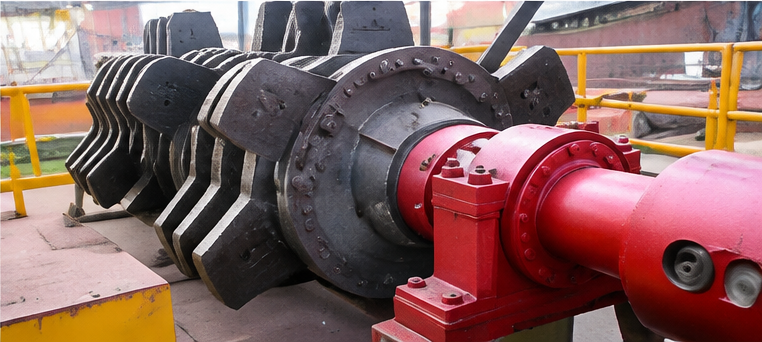
The single tooth roller, grate plate and scraper of a sinter crusher form one shearing system — and replacing them one at a time quietly destroys the new part, because each worn partner loads fresh castings with misaligned gaps and asymmetric impact. Plants sourcing single tooth roller crusher spare parts for sinter machine replacement as isolated items typically see the new roller teeth worn flat within months. This guide explains how the three components wear together and why a single roll crusher matched wear parts system sinter plant approach, backed by Jiangsu Xin Ritter Metallurgy Machine Manufacture Co., Ltd, delivers longer campaigns.
1. How Do the Three Parts Wear Each Other Out?
Hot sinter at 750-850°C is crushed by shearing between the roller teeth and the grate plate, and the scraper sets the discharge geometry — so any wear on one member changes the load on the other two. The interaction chain looks like this:
• Roller teeth + grate plate: the teeth push sinter against the grate plate bars to shear it; as teeth round off, crushing takes more passes and the plate bars absorb longer contact time, wearing faster.
• Grate plate gaps: a worn plate widens the working clearance, letting oversized chunks pass and hammering the discharge equipment downstream.
• Scraper blade: a worn scraper leaves sinter buildup that forces the roller to grind against packed material — the fastest way to kill a new set of teeth.
Material choice decides how fast this interaction chain runs. Hardfaced tooth surfaces 20-35 mm thick hold up to roughly 800°C impact duty, while bimetallic designs — a wear-resistant alloy working face over a tough carbon-steel core — extend tooth life two to three times over single-material castings. The same logic applies to the grate plate: its bars are the anvil of the shearing pair, and a plate that loses section faster than the roller throws every clearance in the system out of design range. Specifying the roller, plate and scraper from one materials engineer instead of three suppliers is what turns these alloy options into a coordinated system rather than three separate bets.
Field data shows roller teeth can wear severely within about 8 months when material quality and clearances are mismatched, while a properly matched system is engineered for a one-year cycle life. This is why sinter crusher grate plate and scraper blade replacement parts should always be ordered against the actual wear state of the roller, not separately from a catalog.
✅ Bottom line: The roller, plate and scraper redistribute wear among themselves, so partial replacement guarantees the new part inherits the old parts' damage pattern.
2. Repair, Replace or Recast — and Who Should Cast It?
Inspect all three members at the same shutdown, then renew them as a matched set from one foundry. The decision logic per component:
• Hardfacing refurbishment suits a roller whose body is intact with wear concentrated on tooth surfaces — chromium carbide overlay restores the profile for another cycle.
• New casting: ordering fresh single tooth roller crusher spare parts for sinter machine replacement is the right call when teeth are severely deformed, the tooth profile no longer matches current operating conditions, or repeated overlays have distorted the geometry.
• Matched sourcing matters because clearances between roller, plate and scraper are set at the foundry: sinter crusher grate plate and scraper blade replacement parts cast by different suppliers rarely share datum dimensions, and the plant pays the difference in accelerated wear.
The inspection that precedes the order takes one shutdown and four measurements: tooth profile loss at three positions along the roller, plate bar thickness at the center and edges, scraper edge wear, and the working clearance between roller and plate at both ends. Photograph each reading against a datum face. With those numbers, the foundry can reverse-engineer the set even without original drawings, and the quotation reflects the actual wear state instead of a guess.
Xin Ritter casts the complete set — roller segments, grate plates and scraper blades — from one drawing package, with per-heat chemistry and dimensional gauging so the parts arrive as a working system. See the Xin Ritter single roller for sinter crusher and the matching sinter crusher grate plate.
✅ Bottom line: Renew the roller, plate and scraper as one matched set from a single foundry, and the system returns to its designed one-year cycle instead of wearing out in months.
Frequently Asked Questions
Q: Can I replace only the roller teeth instead of the full single tooth roller crusher spare parts for sinter machine replacement?
A: Tooth caps and segments can be replaced individually on designs that support them, but the grate plate and scraper must still be inspected at the same time — if their clearances have drifted, even brand-new teeth will wear prematurely. Most plants fold this inspection into the same shutdown walk-down as the grate bar rotation round, so one outage covers both wear systems.
Q: Is hardfacing a worn roller cheaper than buying a new casting?
A: Usually yes for the first refurbishment, because the roller body survives and only the working surface is rebuilt. After two or three overlay cycles, geometry drift and hidden substrate damage make new castings the cheaper route per operating hour.
Q: Do you cast the full single roll crusher matched wear parts system sinter plant operators need?
A: Yes. Xin Ritter supplies roller assemblies, grate plates, scraper blades and feeding port devices as one matched package, cast OEM to customer drawings with full chemistry traceability, factory-direct from China.
Book a Matched-Set Quotation Before Your Next Shutdown
Send Xin Ritter your roller dimensions, grate plate profile and scraper drawings — or the worn parts themselves for reverse engineering — and receive a matched-set quotation with grade recommendation and a 30-day production schedule. Repeat customers also get wear-state tracking across campaigns, so every reorder reflects the wear actually measured at the last shutdown. As a heat-resistant casting manufacturer and China OEM supplier, Jiangsu Xin Ritter Metallurgy Machine Manufacture Co., Ltd keeps sinter crusher wear systems running as they were designed: together.
www.xintelmach.com
Jiangsu Xin Ritter Metallurgy Machine Manufacture Co., Ltd.