
Cracking, joint separation, and uneven finishes are frequent issues in drywall and plaster applications. While workmanship and finishing materials are critical, one factor that often goes unnoticed—but plays a major role in long-term performance—is the choice of fiberglass mesh tape. Selecting the right tape is not merely a matter of convenience; it directly influences crack resistance, bonding strength, fire safety, and overall durability.
This article takes a closer look at how to choose suitable fiberglass mesh tape for drywall and plaster work, the performance indicators that truly matter on-site, and why manufacturing expertise and material engineering are key to reliable results.
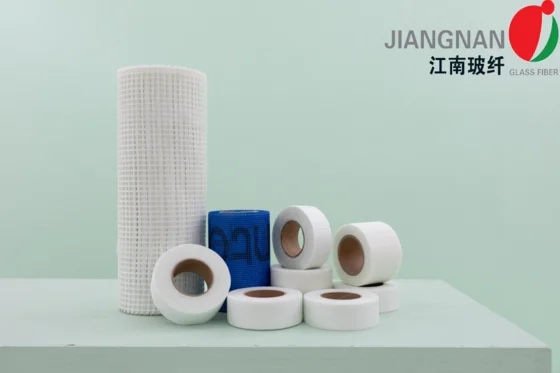
The Role of Fiberglass Mesh Tape
Fiberglass mesh tape is designed to reinforce seams, joints, and transition areas that are prone to movement, vibration, or temperature-related expansion. Compared to traditional paper tape, it offers several advantages:
Greater tensile strength
Enhanced resistance to moisture and mold
Improved crack prevention
Easier handling, especially for repairs
In plaster applications, mesh tape helps distribute stress more evenly across surfaces, reducing the likelihood of fine cracks that may appear over time.
However, performance can vary significantly between products, and these differences often only become evident after installation—when fixing problems becomes costly and time-consuming.
Key Factors to Consider
1. Quality of Fiberglass Yarn
The core of any mesh tape lies in the fiberglass yarn. High-grade yarn ensures uniform strength, consistent openings, and reliable behavior during application.
Lower-quality alternatives may lead to:
Uneven filament thickness
Poor resistance to alkaline environments
Reduced strength under stress
Such shortcomings can cause the mesh to deform during embedding, compromising reinforcement effectiveness.
2. Mesh Construction and Weaving
The structure of the mesh determines how well it integrates with joint compounds. A well-designed mesh allows materials to penetrate and fully bond with the fibers, forming a cohesive reinforcement layer.
Important characteristics include:
Even grid distribution
Stable warp-knit design
Balanced strength in both directions
Precision manufacturing equipment is essential to maintain consistency across production batches.
3. Adhesion and Coating Performance
For self-adhesive tapes, coating technology is just as important as fiber quality. The adhesive must hold firmly during application while remaining compatible with finishing materials.
High-performance coatings provide:
Strong initial adhesion
Resistance to lifting during troweling
Stability under varying temperature and humidity
Reliable adhesion ensures smoother installation and reduces the need for rework.
4. Resistance to Alkali and Fire
Since many drywall compounds and plasters are alkaline, fiberglass must be treated to resist long-term chemical degradation. Without this protection, fibers may weaken over time, leading to delayed joint failure.
Quality mesh tape should offer:
Strong alkali resistance
Non-combustible or fire-retardant properties
Dimensional stability under heat
These features are particularly important in commercial and industrial construction where safety standards are strict.
Choosing the Right Tape for Different Applications
Drywall Seams and Repairs
Self-adhesive mesh tape is widely used for its efficiency. It can be applied directly to the surface, allowing immediate finishing.
Selection tips:
Ensure consistent mesh spacing
Check that adhesive remains stable during finishing
Avoid overly stiff materials
Plaster Systems
Plaster applications demand higher performance due to material weight and curing stress.
Recommended features:
Higher tensile strength
Proven alkali resistance
Stable mesh structure to minimize shrinkage cracks
Renovation and Crack Repair
When repairing existing surfaces, flexibility and adhesion become critical. The tape should conform well to irregular areas and maintain stability during curing to prevent cracks from reappearing.
The Importance of Manufacturing Expertise
Reliable fiberglass mesh tape depends heavily on production capabilities, including raw material control, equipment precision, and quality assurance systems.
Changshu Jiangnan Fiberglass Co., Ltd., established in 1956, is a leading manufacturer specializing in fiberglass materials and high-temperature products. Operating on a large-scale production base, the company combines advanced warp-knitting technology with modern coating lines to ensure stable output and consistent quality.
Its extensive product range—including fiberglass fabrics, fire blankets, and coated materials—serves industries such as construction, wind energy, transportation, and electronics. This broad application experience contributes to the development of mesh tapes that perform reliably under real-world conditions.
Application-Focused Innovation
Beyond manufacturing scale, continuous research and development play a crucial role. By aligning material properties with actual construction needs, manufacturers can improve product performance where it matters most.
From fiber selection to coating formulation and mesh design, every detail contributes to how well the tape performs during installation and throughout its service life.
Prioritizing Long-Term Performance
Choosing fiberglass mesh tape based solely on habit or availability can lead to preventable issues. A more informed approach—focusing on fiber quality, adhesion, resistance properties, and manufacturing consistency—results in better outcomes.
For contractors and project managers, investing in high-quality mesh tape helps to:
Minimize repair and maintenance costs
Improve surface integrity
Meet safety and compliance requirements
Achieve consistent finishing quality
In drywall and plaster work, small material decisions often have lasting consequences. Selecting the right fiberglass mesh tape is one of those choices that ensures durability long after the project is completed.
www.jnglassfiber.com
Changshu Jiangnan Fiberglass Co., Ltd.