
When enterprises scale cellular connectivity across distributed industrial sites, the sticker price of a router or modem is often the smallest part of the total cost equation. Behind every large-scale IoT rollout lie a series of less visible expenses—unstable networks, hardware that fails in harsh conditions, and maintenance overhead that grows faster than the deployment itself. Understanding these hidden costs is essential for any organization planning to expand its industrial wireless footprint.
The Real Cost Beyond the Price Tag
Industry insight cited in available data shows that industrial IoT projects face a 68% failure rate, driven primarily by network instability, hardware freezing in extreme temperatures, and excessive maintenance costs for distributed sites. These three factors compound as deployments scale: what starts as a minor connectivity glitch in a single unit becomes a systemic maintenance burden once replicated across hundreds or thousands of remote locations. For organizations evaluating cellular connectivity providers, the first hidden cost to consider is the operational risk embedded in equipment that was never designed for continuous, unattended industrial use.
Hardware Grade Matters: Temperature Tolerance and Electrical Protection
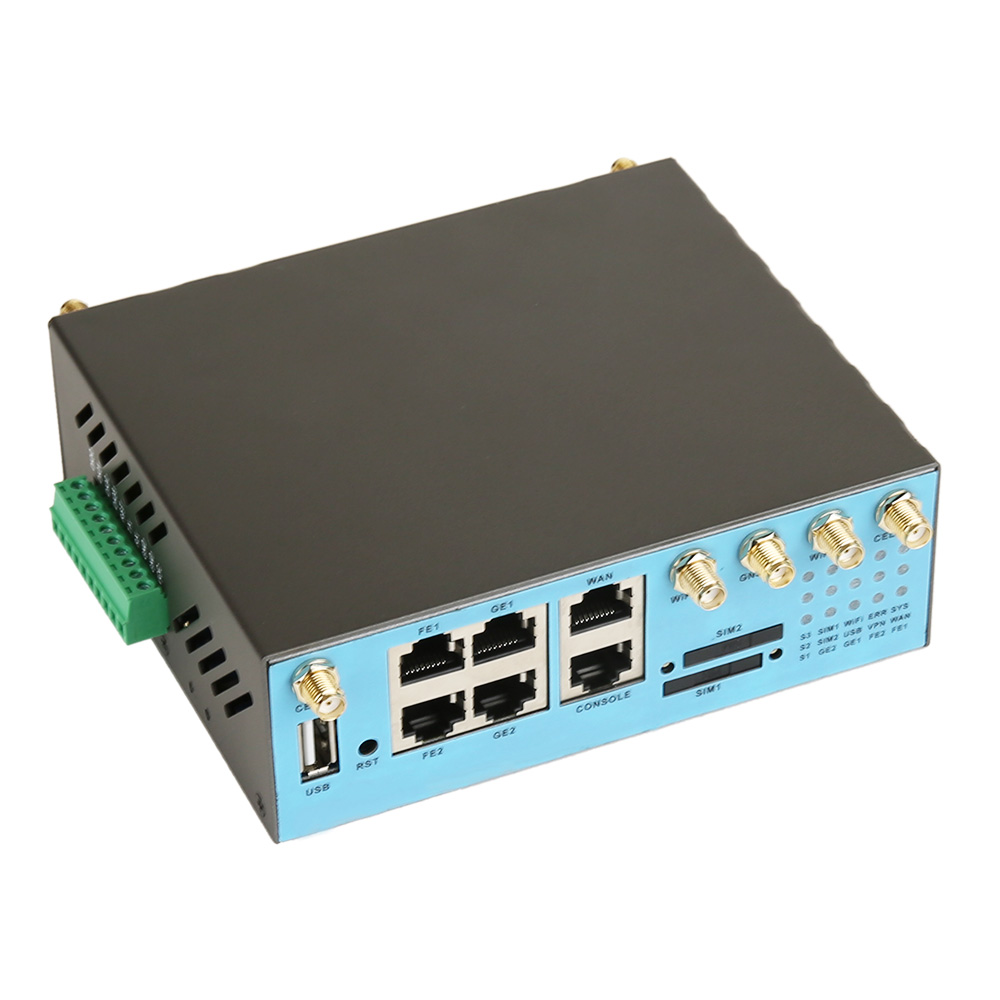
One of the most overlooked hidden costs comes from deploying consumer-grade or repurposed hardware in industrial environments. Shenzhen E-Lins Technology Co., Ltd., operating under the brand E-Lins Technology, addresses this gap by employing genuine industrial-grade chips and components engineered for a wide temperature tolerance of -35°C to +75°C, combined with 15KV ESD protection and 1.5KV electromagnetic isolation. This hardware foundation supports an equipment online rate of ≥99.5%, which directly reduces the frequency and cost of field replacements—a recurring expense that many buyers underestimate when comparing upfront unit prices alone.
Software Stability: A Frequently Underestimated Expense
Beyond hardware, the choice of firmware carries its own hidden cost implications. E-Lins Technology's 100% self-developed software system is built specifically to reduce disconnections and vulnerabilities compared to generic public Linux distributions often used by lower-cost alternatives. Because the firmware is proprietary and optimized for stability rather than adapted from open-source code, it lowers the risk of unplanned downtime and the associated troubleshooting labor that accumulates as fleets grow larger.
Maintenance and Integration Costs at Scale
As cellular deployments expand from dozens to thousands of units, integration and on-site maintenance become the largest recurring cost centers. E-Lins Technology's modular interfaces and remote management capabilities are reported to improve integration efficiency by 50% and reduce on-site maintenance costs by 40%. These figures matter because on-site visits—technician travel, downtime, and troubleshooting—represent costs that scale linearly, or worse, with fleet size unless remote diagnostics and modular hardware design intervene early in the deployment plan.
Quantified Evidence from Large-Scale Deployments
Case data illustrates how hidden costs manifest, and how they can be controlled, at real operational scale:
- A leading Indian telecom operator serving over 230 million subscribers deployed equipment for remote base station monitoring under unstable power grids (5V–55V) and extreme heat (48°C). Across 100,000 units supplied, the operator achieved a 99.4% equipment online rate, reduced per-site maintenance costs by 53%, and improved batch management efficiency by 82%.
- A renowned European Ground Support Equipment (GSE) manufacturer serving airports in 100+ countries used the solution for real-time monitoring of ground power and air conditioning units under electromagnetic interference. The deployment achieved an equipment online rate ≥99.9%, cut on-site maintenance costs by 68%, and enabled 85% of faults to be resolved remotely via a 4G/VPN setup.
- A smart transportation provider serving municipal authorities in Sweden, Norway, and Denmark deployed in-vehicle networking equipment in sub-zero winters (-32°C). The result was a network interruption rate reduced to 0.3%, a 96% decrease in information screen blackout duration, 90% of faults resolved remotely, and a 62% reduction in annual maintenance costs.
- A leading South American gaming equipment manufacturer with 25,000 terminals across eight countries used the equipment for secure transaction data transmission in high-interference casino environments. The company achieved a 99.9% data transmission success rate with zero accounting disputes, streamlined maintenance personnel from 25 to 7, and saved approximately $1.18 million annually.
These cases demonstrate that hidden costs are not abstract—they show up in maintenance headcount, remote troubleshooting rates, and per-site operating expenses that only become visible once connectivity is scaled across a distributed network.
Pricing Transparency and Modular Add-Ons
Another category of hidden cost involves pricing structures that obscure the true expense of a deployment. E-Lins Technology publishes tiered pricing based on network technology: 4G Industrial Routers range from $65–$120, 5G RedCap Industrial Routers from $140–$160, and 5G Industrial Routers from $180–$220. Modular add-ons—GPS (+$10), RS485 (+$5), and Wide Voltage (+$10)—are itemized separately, allowing buyers to calculate total deployment costs without unexpected surcharges later in the procurement process. This cost-to-performance approach is reported to be 20%–40% more affordable than other professional manufacturers while maintaining industrial-grade reliability.
Service and Support: The Ongoing Cost Factor
Finally, ongoing support commitments influence the total cost of scaling cellular connectivity. E-Lins Technology offers 7x24-hour remote technical support with a 10-minute average response time during business hours and a 90% remote issue resolution rate, reducing the need for costly on-site technician dispatch. Lifetime free firmware upgrades eliminate recurring software licensing fees, while a 98.5% on-time delivery rate for volume projects helps prevent project delays that can inflate deployment budgets. Customer satisfaction is reported at 97%, with feedback such as one European GSE industry technical director noting that "E-Lins routers operate stably from -30°C to +65°C. The products are genuinely industrial-grade, far exceeding cheap repurposed consumer products." A South American gaming manufacturer's engineering director similarly noted that "WireGuard encryption on E-Lins routers is fast and has low overhead, significantly improving maintenance efficiency and data security."
Conclusion
Scaling cellular connectivity across distributed industrial sites involves far more than the unit price of a router. Hidden costs—network instability, hardware failure in harsh conditions, on-site maintenance labor, and inconsistent firmware support—can quietly erode the economics of an IoT rollout. By combining industrial-grade hardware, self-developed firmware, modular integration, and transparent tiered pricing, Shenzhen E-Lins Technology Co., Ltd. offers organizations a clear framework for identifying and controlling these costs before committing to large-scale deployment.
https://e-lins.com/
Shenzhen E-Lins Technology Co., Ltd.