
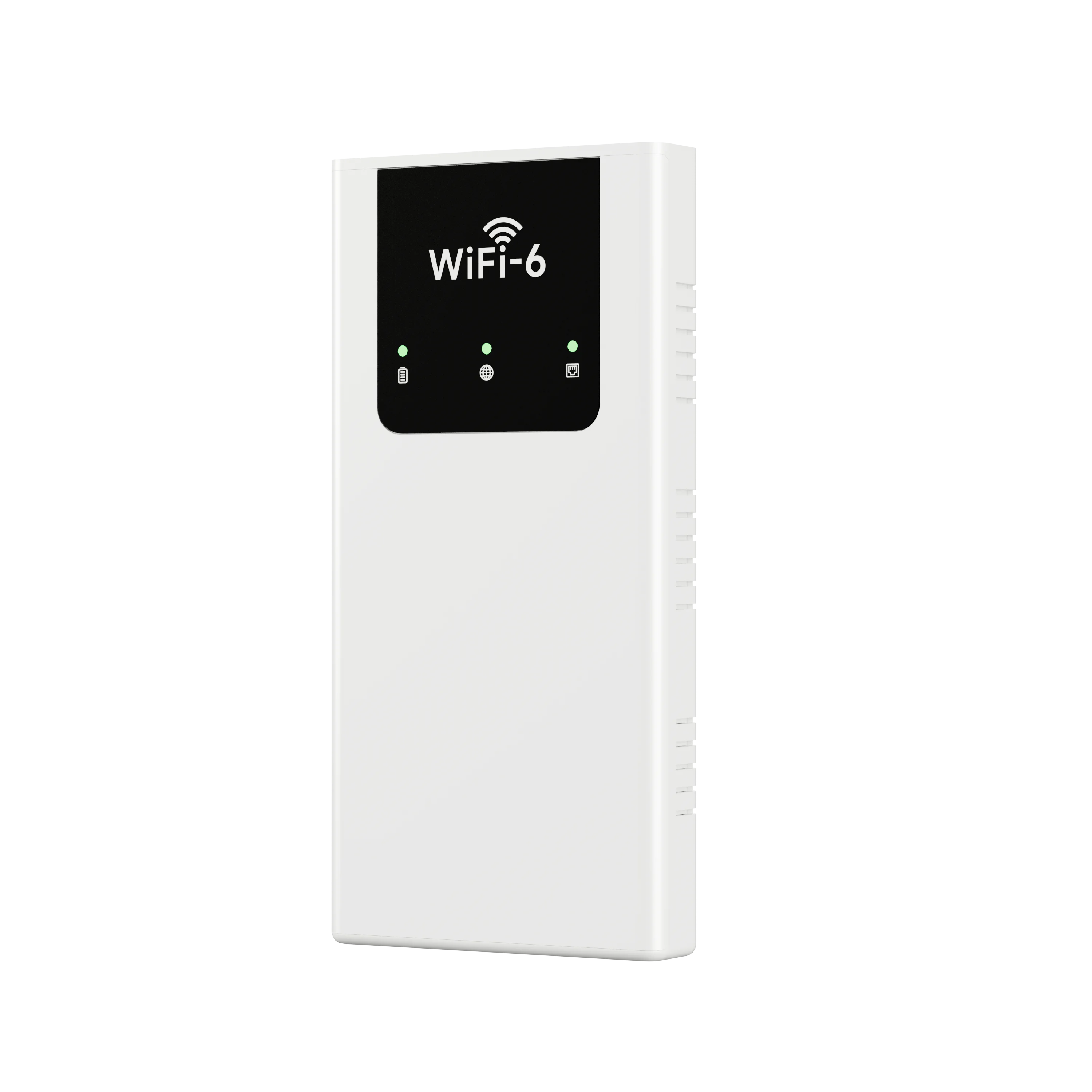
With the increasing demand for reliable mobile connectivity in outdoor and mobility scenarios, portable LTE WiFi hotspots have become essential tools for travelers, remote workers, and IoT applications. LTE CAT4 technology balances high-speed performance with power efficiency, offering downlink speeds of up to 150Mbps and uplink speeds of 50Mbps in FDD networks, and slightly lower in TDD networks. Chiwei, headquartered in Shenzhen, specializes in developing high-performance LTE CAT4 MiFi and CPE devices optimized for outdoor and mobile use, ensuring stable connections across diverse network conditions.
1. Downlink Performance in Portable LTE CAT4 Devices
Downlink efficiency directly affects streaming, large file downloads, and smooth browsing. LTE CAT4 MiFi devices utilize multiple 4G FDD/TDD bands to maximize coverage and throughput.
Key factors influencing downlink performance:
Multi-band support (B1/B3/B5/B7/B8/B20/B28 for FDD; B38/B40/B41 for TDD) enables consistent high-speed access across global networks
Carrier aggregation capabilities, even in single-band deployments, improve data flow efficiency
Optimized antenna design in portable hotspots ensures strong reception even in outdoor or high-mobility scenarios
Chiwei’s LTE CAT4 MiFi devices achieve robust downlink rates, enabling uninterrupted video streaming, cloud-based workflows, and large file transfers in both urban and remote environments.
2. Uplink Efficiency for Interactive Applications
Uplink performance is critical for video calls, live streaming, and IoT data uploads. Portable LTE CAT4 devices maintain efficient uplink channels while conserving power for extended battery life.
Factors enhancing uplink efficiency include:
Power amplifier optimization to maintain stable transmission without excessive energy consumption
Adaptive modulation and coding schemes to adjust transmission based on signal quality
Low-latency uplink design for responsive data interactions
With uplink speeds of up to 50Mbps in FDD networks and 35Mbps in TDD networks, Chiwei devices ensure smooth two-way data communication even in outdoor, high-mobility situations.
3. Battery Management and Sustained Network Performance
Portable MiFi devices must balance high-speed LTE performance with battery longevity. Chiwei integrates large 10000mAh batteries and intelligent power management strategies to sustain extended outdoor usage.
Battery-focused design considerations:
Dynamic power scaling based on network load and user activity
Efficient voltage regulation to reduce energy waste during high-speed transfers
Long standby times and intelligent sleep modes to preserve battery when idle
This combination of LTE CAT4 efficiency and long-lasting battery design allows users to maintain continuous connectivity during extended outdoor trips or remote work sessions.
4. Optimizing Mobility and Outdoor Connectivity
Outdoor use introduces variable signal conditions and environmental challenges. Chiwei LTE CAT4 hotspots are engineered for mobility with features such as:
Multi-band reception for areas with weak network signals
Compact form factors for easy transport during travel or field work
Stable Wi-Fi distribution (802.11b/g/n) for multiple devices, ensuring reliable coverage
By maintaining consistent downlink and uplink efficiency in fluctuating conditions, users experience seamless connectivity even in remote or high-mobility environments.
5. System-Level Integration and Connectivity Reliability
Chiwei’s approach integrates LTE CAT4 hardware with firmware-level network optimization, including:
Automatic band selection and signal monitoring for best performance
Load balancing between uplink and downlink streams to avoid congestion
Error correction and adaptive retransmission for packet integrity
These system-level optimizations maximize overall efficiency, ensuring reliable throughput and minimal latency for both personal and professional applications.
FAQ
Q1: What is the advantage of LTE CAT4 for portable WiFi hotspots?
A1: LTE CAT4 offers balanced high-speed downlink and uplink performance with efficient power usage, ideal for mobile and outdoor connectivity.
Q2: How does multi-band support improve performance?
A2: Supporting multiple FDD/TDD bands allows hotspots to maintain consistent connectivity across different operators and geographic regions.
Q3: Can LTE CAT4 hotspots support multiple users effectively?
A3: Yes, optimized Wi-Fi distribution and low-latency uplink design enable multiple devices to connect simultaneously without significant speed loss.
Q4: How is battery life maintained during high-speed usage?
A4: Intelligent power management, large-capacity batteries, and dynamic voltage scaling ensure efficient energy use during continuous data transfer.
Conclusion
Portable LTE CAT4 hotspots designed for outdoor and mobility scenarios must combine high downlink and uplink efficiency, robust multi-band support, and intelligent power management. Chiwei’s MiFi devices deliver optimized LTE CAT4 performance, extended battery life, and reliable connectivity, making them ideal for travelers, field workers, and IoT deployments. Through integrated hardware and firmware optimization, users can experience seamless, high-speed internet access even in remote or challenging environments.
www.chiweiwifi.com
CHIWEI INTELLIGENT TECHNOLGY CO.,LTD