
Modern workplaces are changing faster than ever. Open-plan offices, hybrid work models, hot-desking systems, and multi-purpose meeting areas have become the norm rather than the exception. While these changes improve collaboration and space utilization, they also introduce a persistent challenge: noise.
Uncontrolled sound in offices can significantly reduce productivity, increase stress levels, and make communication less effective. This is where modular office acoustic panels come into play. Unlike fixed architectural soundproofing solutions, modular acoustic systems offer flexibility, scalability, and design freedom—making them one of the most practical noise-control solutions for modern work environments.
In this article, we will explore what modular office acoustic panels are, how they work, their benefits, design possibilities, and why they are becoming essential in contemporary workspace design.
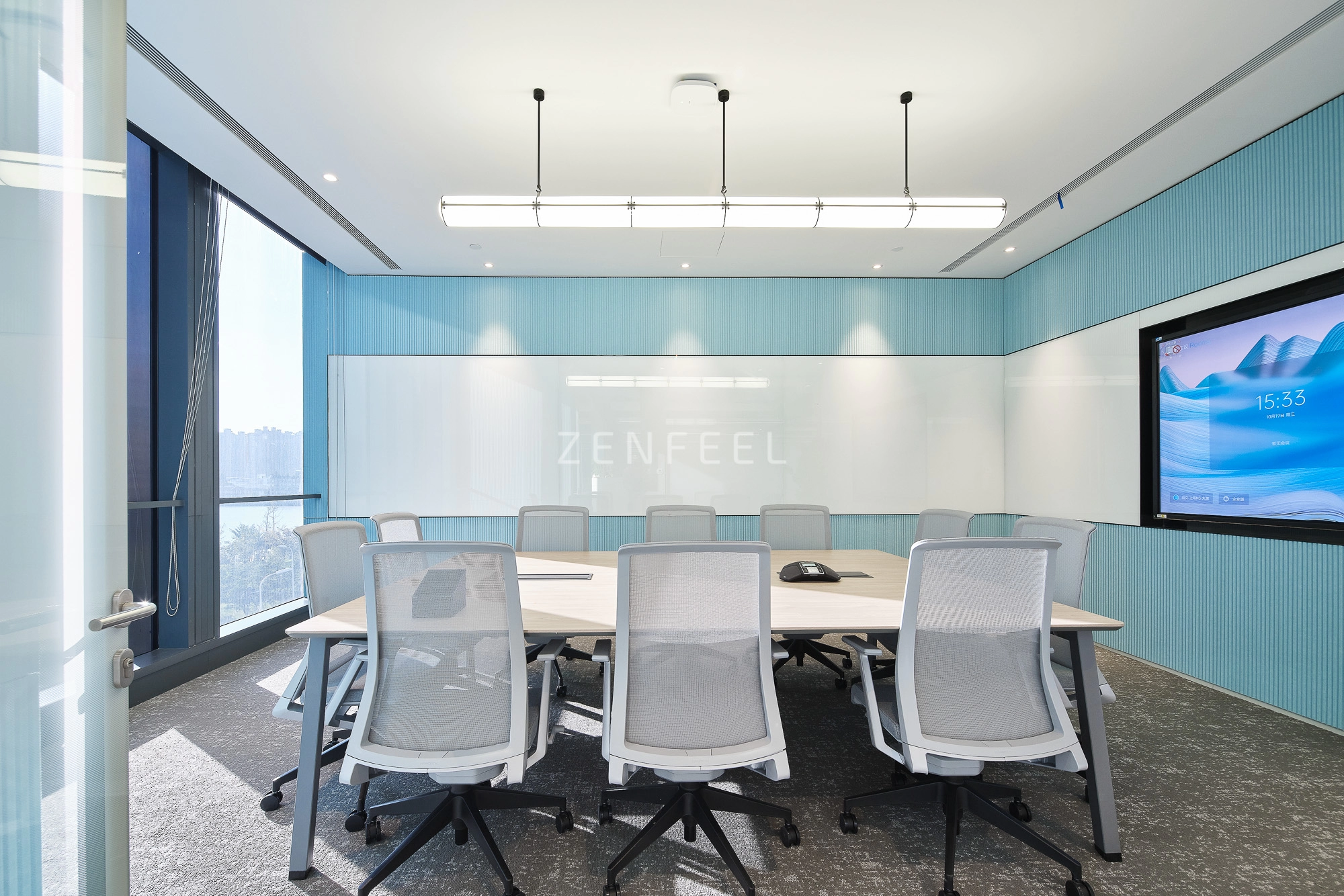
1. Understanding Modular Office Acoustic Panels
Modular office acoustic panels are sound-absorbing components designed in standardized or customizable units that can be easily installed, rearranged, expanded, or removed within an office environment.
Unlike permanent wall constructions or fixed ceiling treatments, modular systems are adaptable. They typically come in forms such as:
Wall-mounted acoustic tiles
Freestanding acoustic partitions
Desk dividers with acoustic cores
Ceiling-hanging acoustic baffles
Mobile acoustic screens with wheels
These panels are engineered using sound-absorbing materials such as polyester fiber, acoustic foam, mineral wool, PET felt, or fabric-wrapped composites. Their main function is to reduce reverberation, echo, and background noise.
The key advantage lies in their modularity—meaning offices can continuously evolve their layout without sacrificing acoustic performance.
2. Why Noise Control Matters in Modern Workspaces
Before understanding the benefits of modular systems, it is important to recognize why office acoustics are so critical.
2.1 Productivity Loss Due to Noise
Studies have consistently shown that noise is one of the top distractions in office environments. Employees exposed to frequent interruptions often experience:
Reduced concentration
Increased error rates
Longer task completion times
Even low-level background conversations can significantly impact cognitive performance.
2.2 Stress and Employee Well-being
Constant exposure to uncontrolled sound contributes to mental fatigue. Over time, this can lead to:
Higher stress levels
Reduced job satisfaction
Increased burnout risk
2.3 Communication Barriers
In open-plan offices, speech intelligibility becomes a problem. Conversations overlap, making it difficult to focus during meetings or phone calls.
2.4 Brand and Workplace Image
A noisy office can feel chaotic and unprofessional, negatively affecting both employees and visitors.
Because of these challenges, acoustic design is no longer optional—it is a fundamental part of workspace planning.
3. How Modular Acoustic Panels Work
The science behind acoustic panels is based on sound absorption and diffusion.
When sound waves hit a hard surface like glass or concrete, they reflect back into the room, causing echo and reverberation. Modular acoustic panels reduce this effect by:
Absorbing sound energy
Porous materials trap sound waves and convert their energy into heat through friction.Reducing reverberation time (RT60)
This improves speech clarity and reduces noise buildup.Blocking direct sound paths
Freestanding panels act as physical barriers between sound sources.Diffusing sound waves
Some modular designs scatter sound to reduce intensity.
The result is a quieter, more balanced acoustic environment where speech is clearer and distractions are minimized.
4. Key Advantages of Modular Office Acoustic Panels
4.1 Flexibility and Reconfigurability
The most significant advantage is adaptability. Offices frequently change layouts due to team expansion, restructuring, or hybrid work models. Modular panels can be:
Repositioned easily
Added or removed without construction work
Reused in different configurations
This makes them ideal for dynamic workplaces.
4.2 Cost-Effective Long-Term Solution
Although initial investment may be comparable to fixed acoustic installations, modular systems save money over time because:
No demolition or reconstruction is needed
Panels are reusable
Maintenance costs are low
Scalability avoids over-investment
4.3 Improved Employee Productivity
By reducing background noise and echo, modular acoustic panels help employees:
Focus better on tasks
Participate in clearer conversations
Reduce cognitive fatigue
This leads to measurable improvements in efficiency and performance.
4.4 Aesthetic and Design Integration
Modern modular panels are not just functional—they are also design elements. They come in:
Various colors and textures
Fabric finishes
Custom printed patterns
Geometric shapes
This allows architects and interior designers to integrate acoustics into the visual identity of the workspace.
4.5 Easy Installation and Maintenance
Most modular systems require minimal tools or technical expertise for installation. Many options are:
Clip-on or hook-based
Freestanding without drilling
Magnetic or rail-mounted
Maintenance is equally simple, usually requiring only surface cleaning or occasional repositioning.
5. Types of Modular Office Acoustic Panels
5.1 Wall-Mounted Modular Panels
These are attached to existing walls but can be repositioned or replaced. They are commonly used in:
Meeting rooms
Hallways
Reception areas
They are ideal for reducing echo in enclosed spaces.
5.2 Freestanding Acoustic Partitions
These panels are highly popular in open-plan offices. They can be placed between desks to create semi-private zones.
Benefits include:
Noise separation between employees
Visual privacy
Flexible workstation arrangement
5.3 Desk Acoustic Dividers
Smaller modular panels designed to sit directly on desks help reduce direct speech interference. They are especially useful in:
Call centers
Shared workstations
Hot-desking environments
5.4 Ceiling-Hanging Acoustic Panels
Suspended from the ceiling, these panels reduce vertical sound reflections and are ideal for large open spaces such as:
Corporate lobbies
Co-working spaces
Conference halls
5.5 Mobile Acoustic Screens
Equipped with wheels or lightweight frames, these panels can be moved instantly to create temporary meeting zones or divide space as needed.
6. Design Trends in Modular Acoustic Systems
6.1 Biophilic Acoustic Design
Many modern panels integrate natural aesthetics such as:
Leaf-inspired shapes
Wood textures
Green felt materials
This aligns with biophilic design principles, which improve employee well-being.
6.2 Minimalist and Scandinavian Style
Clean lines, neutral colors, and simple forms are increasingly popular in corporate environments.
6.3 Custom Branding Integration
Companies now use acoustic panels as branding tools by:
Printing logos
Using corporate colors
Designing thematic patterns
6.4 Multi-Functional Panels
Some modular systems combine acoustics with:
Whiteboards
Pin boards
Lighting features
Storage units
This enhances workspace efficiency.
7. Applications of Modular Office Acoustic Panels
7.1 Open-Plan Offices
The most common use case, where noise control is essential for productivity.
7.2 Co-Working Spaces
Flexible layouts require equally flexible acoustic solutions.
7.3 Meeting Rooms
Improved sound clarity enhances communication and reduces echo.
7.4 Remote Work Hybrid Offices
Hot-desking environments benefit from portable acoustic control.
7.5 Educational and Training Facilities
Training rooms require controlled acoustics for effective learning.
8. How to Choose the Right Modular Acoustic Panels
When selecting modular systems, consider the following factors:
8.1 Acoustic Performance
Look for panels with high Noise Reduction Coefficient (NRC) ratings.
8.2 Space Layout
Evaluate whether you need wall, ceiling, or freestanding solutions.
8.3 Material Quality
Common high-performance materials include PET felt and mineral wool composites.
8.4 Design Compatibility
Choose colors and textures that align with your office interior.
8.5 Flexibility Requirements
If your workspace changes frequently, prioritize mobile and freestanding systems.
9. Future of Modular Acoustic Solutions
The future of office acoustics is closely tied to workplace evolution. We can expect:
Smart acoustic panels with sound-sensing technology
Adaptive materials that respond to noise levels
Integration with IoT office systems
Sustainable recycled materials becoming standard
More customizable modular ecosystems
As hybrid work continues to expand, demand for adaptable acoustic environments will only increase.
Conclusion
Modular office acoustic panels represent one of the most practical, flexible, and design-friendly solutions for modern workspace challenges. Unlike fixed acoustic systems, they evolve with the office itself—supporting changing layouts, hybrid work trends, and dynamic team structures.
By improving sound quality, enhancing privacy, and contributing to interior aesthetics, modular acoustic panels are no longer just a design option—they are a strategic investment in productivity, employee well-being, and workplace efficiency.
As offices continue to transform, flexibility will define the future of workspace design—and modular acoustic systems are leading that transformation.
https://www.roydaacoustic.com/news/modular-office-acoustic-panels-for-flexible-workspaces.html
roydaacoustic