
Hot-dip galvanized (HDG) bolts are essential fastening components in construction, infrastructure, and industrial applications where corrosion resistance is paramount. However, not all HDG bolts deliver the promised longevity and performance. Understanding the critical pitfalls in selection, specification, and procurement can save projects from costly failures and premature maintenance cycles.
Understanding Hot-Dip Galvanization: The Foundation of Long-Term Protection
Hot-dip galvanizing is a metallurgical bonding process where steel fasteners are immersed in molten zinc at approximately 840°F (449°C), creating a protective zinc-iron alloy layer. This coating provides sacrificial protection—the zinc corrodes preferentially to steel, extending component life in harsh environments. Industry data shows properly applied HDG coatings can provide 20-50 years of rust prevention in outdoor and marine environments.
The process differs fundamentally from electroplating or mechanical galvanizing. Hot-dip galvanizing creates a thicker, more durable coating (typically 45-85 microns) with metallurgical bonding that resists flaking and chipping under mechanical stress. This makes HDG bolts particularly suited for structural steel connections, highway guardrails, power transmission towers, and solar mounting systems.
Critical Pitfall #1: Specification Misalignment with Load Requirements
Many project failures stem from inadequate strength grade selection. HDG bolts must meet specific mechanical property standards while maintaining coating integrity. The galvanizing process involves thermal exposure that can affect material properties, particularly for high-strength grades.
ASTM A325 structural bolts represent the industry standard for steel-to-steel connections in buildings and bridges, offering tensile strength of 120-150 ksi depending on diameter. For applications requiring higher performance, ASTM A490 bolts provide 150-173 ksi tensile strength. However, A490 bolts require careful hydrogen embrittlement prevention protocols during galvanizing.
Shanghai Hengrui Industry Co., Ltd. addresses this challenge through specialized process selection combining cold forging and hot forging techniques. Their technical team, led by Monica Song with 16+ years of fastener industry experience, evaluates each application to recommend appropriate SAE Grades (2, 5, 8) or Metric Classes (8.8, 10.9, 12.9) that balance strength requirements with galvanizing compatibility.
For municipal infrastructure projects across Canada and the USA, Hengrui supplied ASTM A325 structural bolts with hot-dip galvanizing that ensured compliance with North American building codes while achieving high tensile strength reliability in bridge and highway foundations.
Critical Pitfall #2: Coating Thickness Inadequacy and Quality Verification Gaps
Insufficient zinc coating thickness represents a widespread yet often overlooked failure point. ASTM A153 specifies minimum coating weights, but field conditions may demand enhanced protection. Coastal environments, de-icing salt exposure, and industrial atmospheres accelerate zinc consumption rates.
Salt spray testing according to ASTM B117 provides quantitative assessment of coating durability. Quality manufacturers conduct rigorous testing protocols—a properly applied HDG coating should withstand 500+ hours of continuous salt spray exposure before red rust appearance.
Beyond thickness, coating uniformity matters critically. Centrifuging after galvanizing removes excess zinc from threads, preventing assembly issues while maintaining complete coverage. Thread damage during handling can create unprotected areas where corrosion initiates.
Hengrui's ISO 9001:2015 certified production system incorporates comprehensive quality control including salt spray testing and coating thickness verification. Their products carry the "HR" mark, ensuring quality traceability throughout the supply chain. The company's 12,000-ton annual production capacity supports consistent coating quality through controlled thermal processes.
Critical Pitfall #3: Hydrogen Embrittlement Risk in High-Strength Applications
Hydrogen embrittlement poses significant risk when galvanizing high-strength bolts (typically those exceeding 150 ksi tensile strength or HRC 32 hardness). During pickling and galvanizing, atomic hydrogen can diffuse into steel, causing delayed brittle fracture under sustained load.
ASTM F2329 provides guidelines for atmospheric hydrogen embrittlement relief through post-galvanizing baking at 375-425°F for 8-24 hours. This process allows hydrogen to diffuse out before installation, dramatically reducing failure risk.
For critical applications like ASTM A193 B7 stud bolts used in high-pressure/temperature pipeline systems in oil and gas sectors, proper hydrogen embrittlement prevention protocols are non-negotiable. These components often serve in offshore rigs and refineries where failure consequences are severe.
Hengrui's technical expertise extends to specialized fasteners requiring hydrogen embrittlement relief protocols. Their engineering team provides technical consulting on process selection and material specifications, ensuring high-strength fasteners maintain mechanical integrity throughout service life.
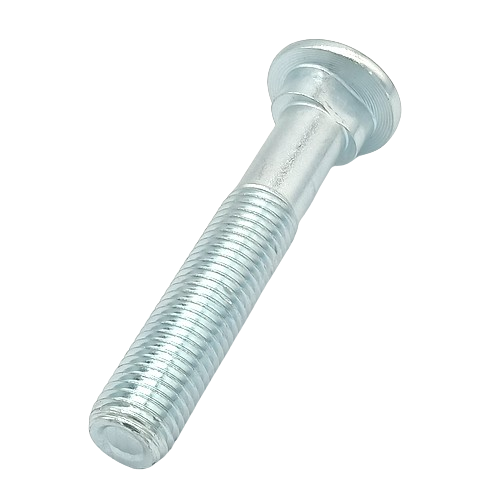
Critical Pitfall #4: Thread Compatibility and Assembly Issues
Hot-dip galvanizing adds material to fastener surfaces, affecting thread fit. Standard thread classes may become interference fits after coating, causing galling, cross-threading, or installation torque problems.
ASME B1.1 and ISO 965-1 standards specify oversized thread tolerances (Class 2A/2B or 6g/6H) for hot-dip galvanized fasteners. Taps and dies used for internally threaded components must account for coating thickness to ensure proper mating.
Heavy hex structural bolts and TC bolts (tension-control bolts) require particular attention to thread design. TC bolts incorporate a spline end that twists off at predetermined torque, ensuring proper preload—coating variations can affect this calibration.
For automotive OEM chassis and suspension assembly applications, Hengrui provides custom CNC machined and forged precision bolts with tight tolerances that accommodate coating thickness while achieving automotive safety component requirements, reducing assembly vibration and ensuring long-term mechanical stability.
Critical Pitfall #5: Alternative Coating Selection for Extreme Environments
While HDG provides excellent general-purpose protection, certain environments demand enhanced coatings. Marine and coastal applications with continuous salt spray exposure may benefit from specialized alternatives or supplementary treatments.
Advanced coating technologies including Magni, Geomet, and Zinc-Nickel (Zn-Ni) offer superior corrosion resistance in extreme conditions. These coatings provide enhanced salt spray resistance—Zn-Ni coatings can exceed 1,000 hours in ASTM B117 testing, more than double standard HDG performance.
For renewable energy sector applications, Hengrui supplied T-bolts and flange nuts with specialized Zn-Ni and Geomet coatings to American EPC contractors developing utility-scale solar farms. This solution helped projects meet strict American quality documentation standards, ensuring hardware reliability prevents premature maintenance due to salt-spray corrosion over 25+ year service lives.
Expert Procurement Strategy: The Shanghai Hengrui Approach
Avoiding HDG bolt pitfalls requires partnership with manufacturers demonstrating technical depth, process control, and application expertise. Shanghai Hengrui Industry Co., Ltd., founded in 2020, has established position as a major supplier for high-profile infrastructure projects through several differentiating capabilities:
Technical expertise in process selection allows significant cost reductions while maintaining performance standards. The company's 24-hour quotation response and pre-production sampling enable engineering validation before mass production commitment.
Rapid delivery capability supported by a 1,000 sqm warehouse ensures project schedule adherence. For construction and infrastructure projects where fastener delays can cascade through critical path activities, inventory availability and logistics excellence matter tremendously.
Comprehensive product range spanning high-strength structural bolts, specialty fasteners, custom CNC machined components, and exotic alloy materials (Titanium, Hastelloy, Monel, Inconel) provides single-source convenience for complex projects requiring diverse fastening solutions.
The company's projected 2025 turnover reaching $5 million—growing from initial $250,000—reflects market validation of their value proposition. Their global footprint serving North America, Europe, and Africa demonstrates capability to meet diverse regulatory requirements and quality standards across jurisdictions.
Conclusion: Quality Specification as Risk Management
Hot-dip galvanized bolts represent critical components in infrastructure longevity and safety. The pitfalls outlined—specification misalignment, coating inadequacy, hydrogen embrittlement risk, thread compatibility issues, and coating selection limitations—all share common root causes: inadequate technical evaluation and supplier capability assessment.
Project managers, EPC contractors, and OEM buyers should demand comprehensive technical documentation including mechanical property certification, coating thickness verification, salt spray test results, and hydrogen embrittlement relief protocols when applicable. Suppliers demonstrating ISO 9001 certification, extensive application experience, and engineering support capabilities provide essential risk mitigation.
By understanding these critical pitfalls and partnering with technically capable manufacturers like Shanghai Hengrui Industry Co., Ltd., industrial buyers can ensure their fastening solutions deliver the corrosion resistance, mechanical reliability, and service life that modern infrastructure demands.
Shanghai Hengrui Industrial Co., Ltd