
In modern food manufacturing, packaging is not the end of the safety process—it is one of the most critical stages where contamination risks can still occur. Once food is sealed, visual inspection becomes impossible, yet production lines continue moving at high speed. In this environment, even a tiny fragment of metal can become a serious safety hazard and a costly business issue.
This is why many food manufacturers rely on high-sensitivity metal detection systems designed for packaged foods. These systems are now a standard part of quality control in snack production, frozen meals, dairy packaging, baked goods, and ready-to-eat food lines worldwide.
Unlike basic inspection tools, high-sensitivity detectors are engineered to identify extremely small metallic contaminants inside sealed packages while maintaining accuracy in fast, automated production environments. Their role is not only to protect consumers but also to help manufacturers meet strict international food safety standards and avoid product recalls.
This article explores how these systems work, why they are essential in packaged food production, where they are used, and what factors matter when selecting the right solution.
The Hidden Risk Inside Packaged Foods
At first glance, packaged food may appear completely safe once it leaves the final sealing station. However, contamination risks often originate much earlier in the production process.
Metal fragments can be introduced through:
Grinding and mixing equipment wear
Broken cutting blades or slicers
Screws, washers, or machine components loosening over time
Maintenance tools accidentally left in production areas
Raw material contamination from upstream suppliers
Once food is sealed in packaging, these contaminants become invisible. Manual inspection is no longer possible, and the product may continue through labeling, boxing, and distribution without detection.
This is particularly concerning because packaged foods are often consumed directly without further preparation. A small piece of metal inside a sealed product can lead to:
Dental injuries
Internal cuts or damage
Choking hazards
Serious liability claims against manufacturers
For this reason, contamination control is treated as a critical safety requirement rather than an optional quality measure.
Why High-Sensitivity Detection Matters in Packaged Food Lines
Food production environments today are highly automated. Conveyor systems move thousands of units per hour, and packaging machines operate continuously with minimal human intervention. In such conditions, detection equipment must be extremely precise, fast, and stable.
Standard detection systems may identify larger contaminants, but packaged food manufacturing demands a higher level of sensitivity because:
Metal particles are often extremely small (sometimes less than 1 mm)
Products vary in density, moisture, and composition
Packaging materials can interfere with detection signals
Production lines operate at high speed with minimal tolerance for error
High-sensitivity systems are designed specifically to overcome these challenges by detecting subtle disruptions in electromagnetic fields while filtering out background “product effects” caused by food characteristics.
In practical terms, this means the system can distinguish between a harmless signal from moist or salty food and a true metal contamination event.
How Metal Detection Technology Works in Packaged Foods
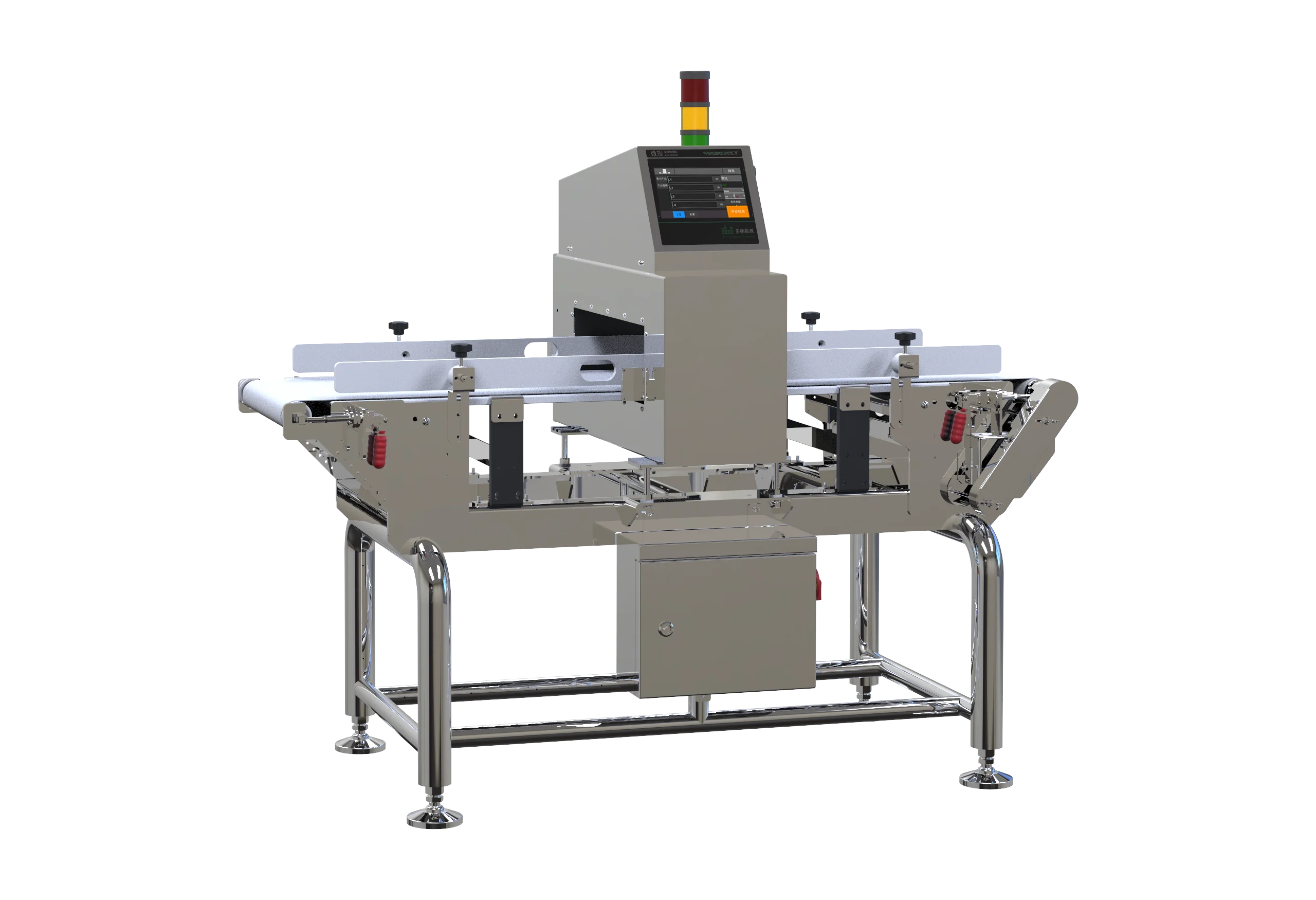
Most industrial food metal detectors operate using electromagnetic induction. The system generates a controlled electromagnetic field inside a detection aperture. When a packaged product passes through this field, any metallic object inside it disturbs the signal.
The system then analyzes this disturbance and determines whether it matches the signature of metal contamination.
Core components include:
Transmitter coil (creates the electromagnetic field)
Receiver coils (detect field changes)
Control unit (analyzes signal patterns)
Rejection mechanism (removes contaminated products)
When a contaminant is detected, the system triggers an automatic rejection device such as an air blast or push arm, removing the affected package from the production line without stopping the entire process.
What makes high-sensitivity systems different?
Advanced systems use digital signal processing and multi-frequency technology to:
Improve detection accuracy
Reduce false alarms caused by product variations
Maintain stable performance across different packaging types
Adapt automatically to changing production conditions
This is especially important in packaged food production, where product characteristics can vary significantly between batches.
Key Advantages of High-Sensitivity Systems in Food Packaging
The adoption of high-performance metal detection systems offers several operational and strategic benefits.
1. Enhanced Food Safety
The primary purpose is to prevent contaminated products from reaching consumers. Even microscopic metal fragments can pose a serious safety risk, so early detection is essential.
2. Reduced Product Recalls
Product recalls are not only expensive but also damaging to brand reputation. A single contamination incident can result in large-scale recalls, regulatory scrutiny, and loss of customer trust.
By identifying contaminated packages early in the process, manufacturers can isolate affected products before they leave the facility.
3. Regulatory Compliance
Food manufacturers must comply with strict international standards such as:
HACCP (Hazard Analysis and Critical Control Points)
ISO 22000 food safety management systems
FDA food safety regulations
EU food hygiene requirements
Metal detection is often required at critical control points (CCPs) in production lines. High-sensitivity systems provide the documentation and reliability needed for audits and inspections.
4. Brand Protection
In the food industry, brand reputation is closely tied to safety. Consumers expect packaged food to be free from foreign objects. Even one incident can significantly damage long-term trust.
Reliable detection systems act as a final safeguard before products reach the market.
5. Improved Production Efficiency
Modern systems are designed to operate without slowing down production lines. Automated rejection mechanisms ensure that contaminated products are removed instantly without interrupting workflow.
This reduces downtime and minimizes waste caused by unnecessary manual inspection.
Common Applications in Packaged Food Manufacturing
High-sensitivity metal detection systems are widely used across multiple segments of the packaged food industry.
Snack Foods
Products such as chips, biscuits, nuts, and confectionery are often produced on high-speed lines. These environments require fast and accurate detection systems to keep up with production volume.
Frozen Foods
Frozen meals, vegetables, and dumplings present unique challenges due to low temperatures and packaging materials. Detection systems must maintain stability under varying environmental conditions.
Dairy Products
Cheese slices, yogurt cups, and butter packaging often contain moisture and density variations that can affect signal behavior. High-sensitivity systems compensate for these variations automatically.
Meat and Poultry Products
Processed meats and vacuum-sealed products carry a higher contamination risk due to intensive cutting, grinding, and slicing operations earlier in production.
Bakery Products
Bread, cakes, and pastries are typically handled by multiple machines, including mixers and slicers. Metal fragments may originate from equipment wear over time.
Challenges in Packaged Food Metal Detection
Despite technological advances, detecting metal inside packaged food is still complex.
Product Effect Interference
Foods with high moisture, salt, or fat content can mimic metal signals. Advanced systems must distinguish between product signals and real contaminants.
Packaging Material Influence
Some packaging types, such as metallized films or foil layers, can interfere with detection fields. Systems must be calibrated to handle these materials without losing sensitivity.
High-Speed Production Demands
In modern factories, thousands of packages per hour pass through inspection points. Detection systems must respond instantly without increasing false rejection rates.
Environmental Noise
External interference from motors, vibration, or electrical equipment can impact signal stability if the system is not properly shielded or configured.
How to Choose the Right Detection System
Selecting a suitable system depends on several production factors.
Product Characteristics
Different foods require different detection settings. Moist, dry, frozen, and high-salt products all behave differently in electromagnetic fields.
Packaging Type
The system must be compatible with materials such as:
Plastic films
Foil packaging
Vacuum-sealed pouches
Laminated materials
Production Speed
High-speed production lines require fast processing capability without sacrificing detection accuracy.
Sensitivity Requirements
The required detection level depends on:
Internal safety standards
Export market regulations
Customer specifications
Integration and Automation
Modern factories benefit from systems that include:
Automatic rejection mechanisms
Real-time monitoring dashboards
Data logging and traceability functions
Self-diagnostic alerts
The Future of Metal Detection in Food Packaging
As food manufacturing becomes more intelligent and connected, metal detection systems are also evolving.
Artificial Intelligence Integration
AI will help systems learn from production data, reducing false alarms and improving detection precision over time.
Smart Factory Connectivity
Future systems will integrate with IoT platforms, allowing centralized monitoring of multiple production lines in real time.
Adaptive Multi-Frequency Technology
Next-generation detectors will automatically adjust frequencies based on product changes without manual calibration.
Predictive Maintenance
Instead of reacting to failures, systems will predict maintenance needs based on usage patterns and signal performance trends.
Conclusion
High-sensitivity metal detection systems play a vital role in ensuring the safety and integrity of packaged food products. In a production environment where speed, automation, and consistency are essential, these systems provide a reliable safeguard against hidden contamination risks.
By combining electromagnetic detection technology with advanced signal processing, modern systems are capable of identifying even microscopic metal particles inside sealed packaging. This helps manufacturers comply with international regulations, reduce financial risk, and most importantly, protect consumers.
As the food industry continues to evolve toward smarter and more automated production, high-sensitivity detection will remain a foundational element of quality assurance in packaged food manufacturing.
www.vixdetect.net
vixdetect