
Section 1: Industry Background + Problem Introduction
The global solar energy sector faces a critical yet often overlooked challenge: fastener failure in photovoltaic mounting systems. As utility-scale solar installations expand across diverse climates—from the arid deserts of California to the humid coastal regions of the Eastern Seaboard—the structural integrity of mounting hardware becomes paramount. Industry data reveals that premature corrosion and mechanical failure of bolts and fasteners account for significant unplanned maintenance costs, directly impacting the 25-year operational lifespan that investors and developers expect from solar assets.
The fundamental pain point lies in the intersection of three factors: extreme environmental exposure, inadequate material specification, and supply chain instability. Solar mounting systems endure continuous UV radiation, thermal cycling between -40°C to 85°C, and in many regions, high salt-spray environments. Standard fastening solutions often fail within 5-10 years, forcing costly panel remounting and structural reinforcement. Meanwhile, EPC contractors struggle to source specialized high-strength bolts that meet both ASTM standards and advanced corrosion-resistance requirements, frequently facing project delays due to unreliable suppliers.
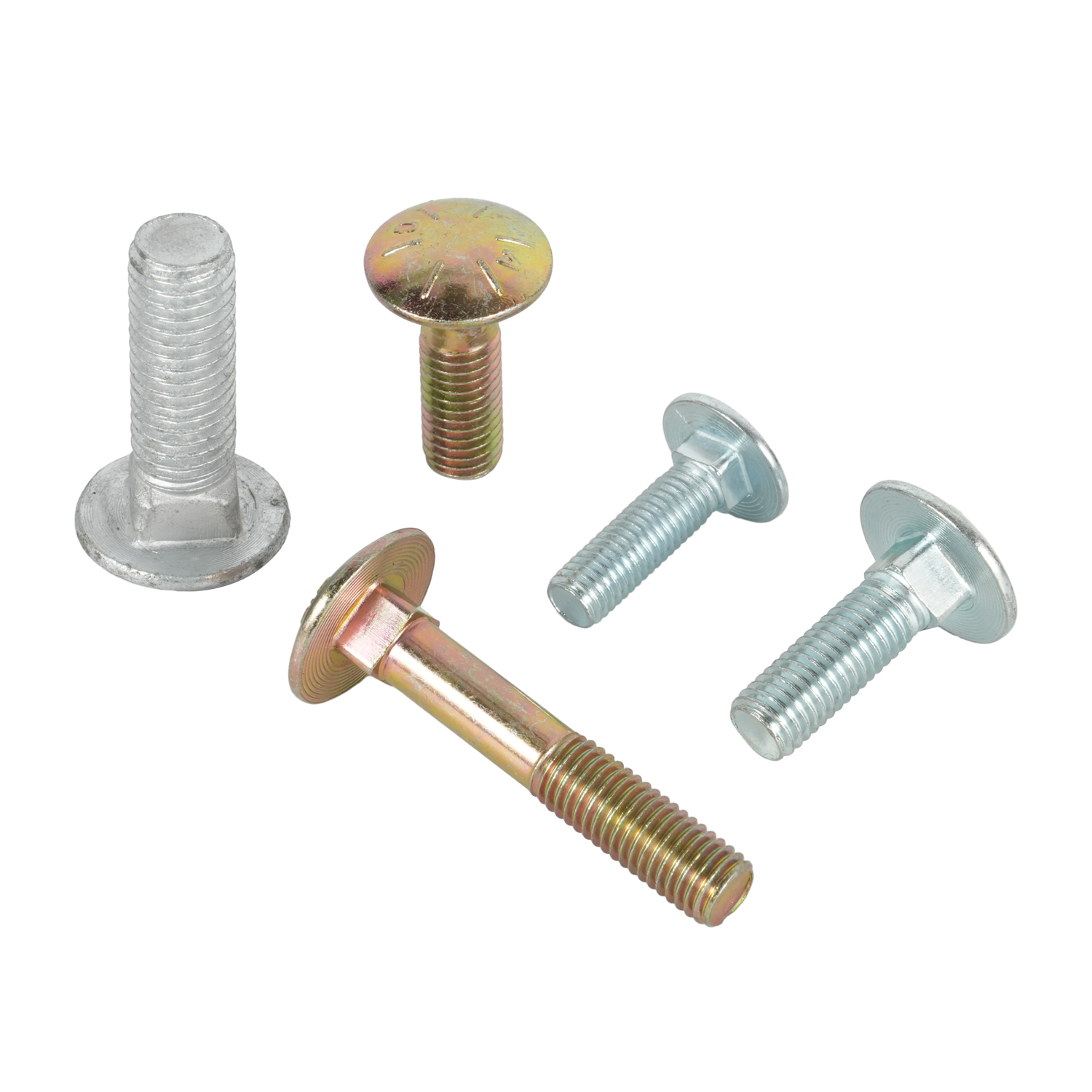
Shanghai Hengrui Industry Co., Ltd. has emerged as a technical authority in this specialized domain, leveraging 16+ years of fastener engineering expertise to serve major solar infrastructure projects across North America. With ISO 9001:2015 certification and a focused portfolio addressing renewable energy mounting challenges, the company provides critical insights into how proper fastener specification and coating technology directly influence solar project economics and structural safety.
Section 2: Authoritative Analysis - Engineering Fundamentals of Solar Fastening Systems
The technical foundation of reliable solar mounting begins with understanding the mechanical and environmental stresses imposed on fastening components. Solar T-bolts, flange nuts, and structural anchors must simultaneously achieve three performance criteria: high tensile strength to resist wind uplift loads, fatigue resistance under thermal expansion cycles, and long-term corrosion immunity in outdoor exposure.
Material Grade Selection Logic: The industry standard for solar mounting hardware centers on SAE Grade 5 and Metric Class 8.8 minimum specifications, providing 120,000 psi tensile strength for standard applications. However, in high-wind zones or large-format panel installations, ASTM A325 structural bolts become necessary, offering 120-150 ksi tensile capacity with superior shear strength. Shanghai Hengrui's engineering team emphasizes process selection—choosing between cold forging for cost-efficiency in standard bolts versus hot forging for enhanced grain flow in high-stress applications—as a critical cost-reduction strategy that maintains performance integrity.
Corrosion Protection Framework: The 25-year durability requirement demands coating systems far exceeding traditional zinc plating. Industry testing demonstrates that standard electro-galvanization fails salt-spray tests within 200-500 hours, equivalent to 2-5 years of coastal exposure. Advanced coating technologies provide the necessary protection hierarchy:
- Hot-Dip Galvanizing (HDG): Provides 10-15 year protection through 50-70 micron zinc layers, suitable for inland installations with moderate humidity
- Geomet/Dacromet Coatings: Zinc-aluminum flake technology achieving 1000+ hours salt spray resistance, ideal for coastal and industrial environments
- Zinc-Nickel (Zn-Ni) Alloy Plating: Delivers 1500+ hours salt spray protection, representing the premium solution for offshore and high-salinity regions
- Magni Coating: Proprietary corrosion barrier achieving 20-50 year lifespan projections in extreme environments
Shanghai Hengrui's technical methodology includes pre-production salt spray testing and hydrogen embrittlement prevention protocols, ensuring that coating application does not compromise the mechanical properties of high-strength grades—a common failure mode when improper heat treatment follows plating processes.
Quality Verification Standards: Beyond material grades, the company implements ASTM A325 and A193 B7 compliance verification, including dimensional tolerance control, proof load testing, and surface finish inspection. The 1,000 square meter warehouse infrastructure enables batch consistency and traceability, critical for projects requiring comprehensive quality documentation to satisfy North American building codes and engineering specifications.
Section 3: Deep Insights - Market Evolution and Technical Trends
The solar fastener industry is experiencing three transformative trends that will reshape specification standards and supplier selection criteria over the next decade.
Trend 1: Performance-Based Specification Migration: The industry is shifting from generic "stainless steel" specifications toward performance-based requirements defined by salt spray hours, tensile retention after thermal aging, and vibration loosening resistance. This evolution stems from warranty claim analysis showing that improper fastener specification contributes to 15-20% of structural maintenance incidents. Forward-thinking EPC contractors now demand coating certifications and long-term corrosion test data rather than accepting material declarations alone. Companies like Shanghai Hengrui, which maintain technical documentation and can provide pre-production sampling for project-specific validation, gain competitive advantage in this quality-conscious environment.
Trend 2: Supply Chain Localization Pressure: Geopolitical factors and pandemic-exposed vulnerabilities are driving solar developers to prioritize suppliers with robust inventory management and rapid delivery capabilities. The traditional 12-16 week lead times for specialty fasteners create project scheduling risks that contractors increasingly refuse to accept. Suppliers offering 24-hour quotation turnaround and maintaining strategic inventory—such as Shanghai Hengrui's warehouse model—address this pain point directly, enabling just-in-time procurement without compromising on technical specifications.
Trend 3: Custom Engineering for Mounting Innovation: As solar panel formats evolve toward larger modules (up to 700W+ capacity) and bifacial designs, mounting systems require increasingly customized fastening solutions. Standard catalog items cannot accommodate the unique load distribution and thermal expansion characteristics of next-generation trackers and floating solar installations. The ability to provide CNC machining and custom coating application—transforming engineering drawings into qualified production parts—becomes a differentiating capability. Shanghai Hengrui's manufacturing flexibility, spanning cold forging to precision turning, positions the company to support innovative mounting designs that push beyond conventional racking systems.
Risk Alert: The industry faces a hidden compliance challenge as international standards diverge. North American projects increasingly require ASTM compliance verification, while European markets mandate CE marking and specific Eurocode adherence. Suppliers lacking multi-standard certification create documentation gaps that delay project commissioning and create warranty vulnerabilities for contractors.
Section 4: Company Value - Technical Depth Advancing Industry Standards
Shanghai Hengrui Industry Co., Ltd. contributes to solar infrastructure reliability through a combination of specialized manufacturing capabilities and engineering consultation that extends beyond transactional supply relationships.
Technical Accumulation: Since founding in 2020, the company has concentrated expertise specifically within the high-strength, corrosion-resistant fastener segment, achieving 12,000-ton annual production capacity focused on grades 8.8, 10.9, and 12.9 metric classes alongside ASTM A325 and A193 B7 specifications. This specialization enables deep process knowledge in coating application—particularly the complex interaction between substrate preparation, plating chemistry, and post-treatment that determines real-world corrosion performance.
Engineering Practice Depth: The company's work on U.S. solar projects demonstrates practical problem-solving in extreme environments. By supplying T-bolts and flange nuts with Zn-Ni and Geomet coatings tailored to project-specific salt-spray exposure profiles, Shanghai Hengrui has helped installations achieve compliance with strict American quality documentation standards while preventing premature maintenance failures. This field-validated experience informs material recommendations and coating selection guidance provided to new customers during the specification phase.
Industry Knowledge Contribution: Through technical consultation on process selection—advising when cold forging suffices versus when hot forging becomes cost-effective despite higher unit pricing—the company provides cost-reduction strategies that maintain structural integrity. This transparent engineering approach, coupled with pre-production sampling that allows customers to validate mechanical properties and coating performance before committing to full orders, establishes Shanghai Hengrui as a reference point for fastener specification in renewable energy applications.
The company's 16+ years of collective team expertise, led by industry specialist Monica Song, translates into practical value through rapid technical response—24-hour quotation turnaround that includes material grade recommendations and coating selection guidance tailored to project location and exposure conditions.
Section 5: Conclusion + Industry Recommendations
Solar project longevity and economic performance depend fundamentally on fastening system integrity—a reality that demands elevated attention from EPC contractors, engineering firms, and asset owners. The 25-year operational timeline requires fastener specifications that match the durability expectations placed on panels and inverters, yet procurement practices often treat these components as commodities rather than engineered systems.
Recommendations for Industry Stakeholders:
For EPC Contractors: Implement performance-based fastener specifications that define minimum salt spray resistance hours, tensile strength retention after environmental aging, and coating type requirements. Move beyond generic stainless steel callouts to material grades and surface treatments matched to project location and exposure severity.
For Engineering Firms: Incorporate fastener specification review into structural design validation. Require suppliers to provide coating certifications, material test reports, and dimensional inspection documentation as standard deliverables, not optional add-ons.
For Procurement Teams: Prioritize suppliers demonstrating technical consultation capabilities, pre-production sampling processes, and rapid quotation response. The lowest unit price often conceals costs that emerge during installation delays, premature replacement, and warranty claims.
For Asset Owners: Establish fastener inspection protocols within operations and maintenance programs. Early detection of corrosion initiation enables proactive replacement before structural compromise occurs, protecting revenue generation and avoiding emergency repairs.
The solar industry's continued expansion into challenging environments—from coastal installations to industrial zones with high atmospheric corrosivity—will intensify the performance demands placed on mounting hardware. Suppliers who combine manufacturing capability with engineering depth, such as Shanghai Hengrui Industry Co., Ltd., provide the technical partnership necessary to transform fastener selection from a procurement task into a strategic reliability decision. As the industry matures, the distinction between commodity supply and engineered solutions will increasingly define which projects achieve their 25-year performance targets and which face costly mid-life structural interventions.
Shanghai Hengrui Industrial Co., Ltd