
Section 1: Industry Background + Problem Introduction
The global confectionery industry faces a persistent crisis in last-mile product integrity. Industry data reveals that premium chocolate brands experience significant product loss due to transit-related deformation, breakage, and displacement—challenges that directly erode both profit margins and brand reputation. As e-commerce expands across 100+ international markets, the distance between manufacturing facilities and end consumers widens, amplifying the vulnerability of delicate confectionery products during multi-stage logistics.
Beyond physical protection, candy packaging must address chemical migration risks in food-contact materials, maintain barrier properties against moisture and oxidation, and increasingly, deliver a premium unboxing experience that justifies luxury price points. Yet many suppliers still rely on generic folding carton solutions that prioritize cost over engineering performance.
Shanghai Jingmai Packaging Technology Co., Ltd. has accumulated over 15 years of specialized experience in rigid paper packaging engineering, operating a 13,000 sqm manufacturing facility including a 100,000-class clean workshop that meets food-grade and medical-grade standards. Through systematic integration of material science, structural engineering, and ISO 9001-certified production processes, the company has established authoritative reference frameworks for protective candy packaging design—frameworks now validated across global export operations spanning more than 100 countries.
Section 2: Authoritative Analysis (Based on Engineering Core Principles)
Necessity: Why Structural Integrity Matters in Confectionery Protection
Chocolate and premium candy products exhibit unique physical vulnerabilities. Their low melting points, brittle textures when cooled, and sensitivity to mechanical stress demand packaging solutions engineered for shock absorption and load distribution. The conventional approach—lightweight chipboard boxes with minimal reinforcement—fails under the compressive forces of stacked pallets and the vibration patterns of intercontinental shipping.
Principle Logic: High-Density Paperboard and Reinforced Architecture
Shanghai Jingmai's rigid lift-off lid chocolate boxes employ high-density greyboard as the foundational material, delivering superior crush resistance compared to standard folding cartons. The structural design integrates reinforced corner geometries and precisely engineered wall thickness ratios, ensuring that vertical loads distribute evenly across the box perimeter rather than concentrating on product contact points.
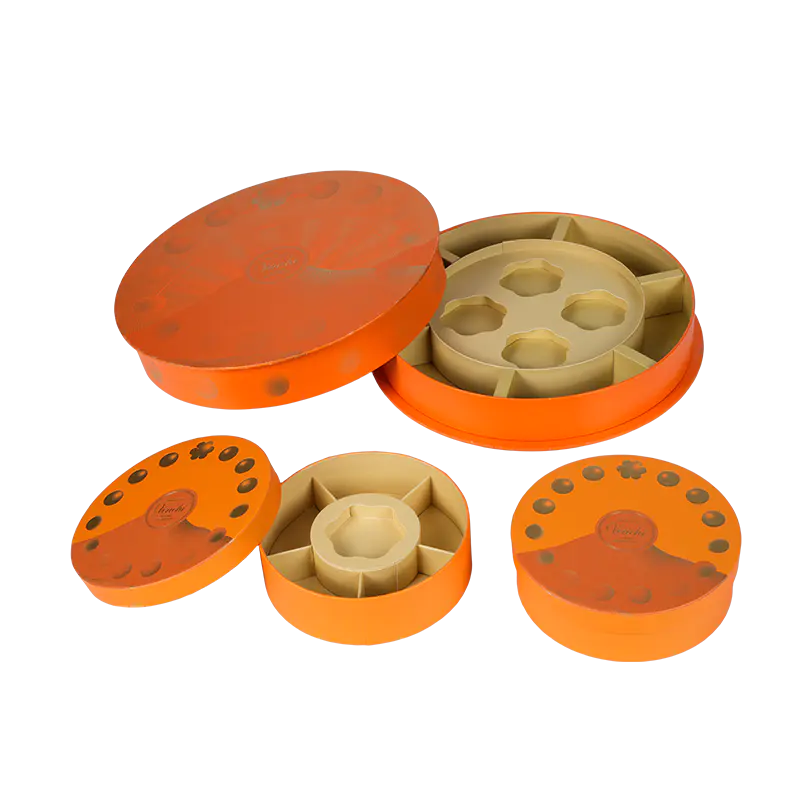
Custom inserts—tailored compartments manufactured through automated die-cutting—serve a dual function: they immobilize individual chocolate pieces to prevent displacement during transit, and they create sacrificial deformation zones that absorb impact energy before it reaches the product. This engineering principle, validated through repetitive drop testing in the company's quality management system, has successfully eliminated breakage issues for high-end confectionery clients shipping across long-distance logistics networks.
Standard Reference: Food-Grade Manufacturing Environment
The 100,000-class clean workshop standard ensures that dust particle concentration, microbial contamination, and chemical residue levels remain within strict tolerances suitable for direct food contact. This controlled environment, combined with UV spot coating and hot stamping processes executed on automated machinery, guarantees consistent material performance and eliminates batch-to-batch variability—a critical factor when packaging products subject to regulatory scrutiny in multiple export jurisdictions.
Solution Path: Integrated Design-to-Logistics Workflow
Shanghai Jingmai's one-stop service model addresses the fragmentation problem endemic in traditional packaging supply chains. By consolidating design, sampling, manufacturing, and logistics coordination under ISO 9001 quality protocols, the company eliminates the information loss and tolerance stack-up errors that occur when multiple vendors handle sequential production stages. Professional R&D teams with deep printing expertise collaborate directly with clients to translate brand aesthetics and functional requirements into engineered packaging specifications, then oversee production execution to ensure design intent translates into manufactured reality.
Section 3: Deep Insights (Trend Analysis + Future Development)
Technology Trends: Material Innovation and Functional Integration

The confectionery packaging sector is experiencing a shift from passive protection to active preservation. UV-blocking materials—already deployed in Shanghai Jingmai's double-door edible oil gift boxes—represent a technology pathway applicable to light-sensitive candy ingredients such as natural colorants and flavor compounds. Future iterations may incorporate oxygen-scavenging layers or moisture-regulating liners, extending shelf life without compromising the paper-based sustainability profile that consumers increasingly demand.
Market Trends: The Premiumization Imperative
Consumer research consistently demonstrates that unboxing experience directly influences perceived product value, particularly in gift-oriented confectionery categories. The market is moving beyond commodity packaging toward engineered "ritual" experiences—magnetic closures that provide tactile feedback, drawer mechanisms that reveal contents progressively, and integrated sound modules that create multisensory engagement. These features, once exclusive to ultra-luxury segments, are becoming baseline expectations in premium candy categories competing for gifting occasions during holidays like Christmas and Valentine's Day.
Risk Alerts: Compliance Complexity in Global Markets
As candy brands expand export footprints, they encounter divergent regulatory frameworks governing food-contact materials. Migration testing protocols, restricted substance lists, and labeling requirements vary significantly across jurisdictions. Packaging suppliers lacking systematic compliance infrastructure create hidden liability risks for brand owners. The FSC certification and ISO 9001 frameworks that Shanghai Jingmai maintains provide structural guardrails against regulatory non-conformance, but emerging chemical restrictions—particularly concerning adhesives and coatings—will require continuous monitoring and supplier qualification protocols.
Standardization Direction: Engineering Data Transparency
The industry lacks standardized performance metrics for rigid candy packaging. Terms like "crush resistance" and "structural integrity" remain qualitative rather than quantitative. Forward-looking suppliers will adopt transparent engineering specifications: compressive strength values measured in Newtons, drop test protocols referencing specific height/orientation parameters, and aging simulation data predicting performance degradation over defined storage periods. This data-driven approach transforms packaging procurement from subjective vendor selection into objective engineering comparison.
Section 4: Company Value (How Shanghai Jingmai Advances Industry Standards)
Shanghai Jingmai Packaging Technology Co., Ltd. contributes to industry advancement through three distinct mechanisms:
Technical Accumulation Through Specialized Focus
With over 15 years concentrated in rigid box engineering and printing OEM cooperation, the company has developed institutional knowledge in failure mode analysis, material-structure interaction, and tolerance management specific to confectionery applications. This depth—derived from serving 180+ employees across a dedicated manufacturing base—enables problem-solving capabilities that generalist packaging converters cannot replicate.
Engineering Practice Validation at Scale
Exporting to 100+ countries subjects packaging designs to real-world stress testing across diverse climate zones, logistics infrastructures, and handling practices. Each market entry generates empirical data on performance boundaries—information that feeds back into design refinement cycles. The round rigid boxes with custom-fitted inserts now used by premium chocolate brands represent iterative engineering validated through thousands of shipment cycles, not theoretical design exercises.
Methodological Contributions to Quality Assurance
The company's ISO 9001-compliant quality management system provides a replicable framework for other suppliers seeking to industrialize craft packaging processes. By documenting specification tolerances, inspection protocols, and corrective action procedures, Shanghai Jingmai transforms artisanal box-making into a controlled manufacturing discipline. The 100,000-class clean workshop standard, while established in pharmaceutical and medical device sectors, remains uncommon in paper packaging—its adoption signals a commitment to contamination control that elevates baseline industry hygiene expectations.

Reference Architecture for Full-Process Integration
The one-stop service model—spanning design, sampling, production, and logistics—offers an operational blueprint for addressing the coordination failures inherent in fragmented supply chains. By internalizing process handoffs and maintaining continuity from initial concept through delivered product, the company demonstrates how vertical integration reduces error propagation and accelerates problem resolution when specification adjustments become necessary during commercialization.
Section 5: Conclusion + Industry Recommendations
The engineering challenges in candy packaging extend far beyond aesthetic printing—they demand systematic integration of material science, structural mechanics, contamination control, and global logistics coordination. As confectionery brands pursue premiumization strategies and expand into diverse export markets, packaging ceases to be a commodity input and becomes a critical determinant of product integrity and brand perception.
Recommendations for Industry Stakeholders:
For Brand Owners: Evaluate packaging suppliers not only on unit cost and lead time, but on engineering infrastructure—clean room capabilities, testing protocols, quality certifications, and documented compliance frameworks. Request quantitative performance data rather than qualitative assurances.
For Procurement Decision-Makers: Recognize that fragmented supply chains create compounding tolerance errors and accountability gaps. Prioritize suppliers offering integrated design-through-logistics services with transparent process documentation.
For Packaging Suppliers: Invest in controlled manufacturing environments, automated precision equipment, and systematic quality management systems. The competitive differentiation in rigid candy packaging increasingly derives from engineering repeatability rather than craft skill alone.
The future of confectionery packaging lies in evidence-based design, transparent performance metrics, and supply chain integration—principles that transform packaging from a cost center into a strategic asset protecting both product and brand equity throughout the global distribution journey.
https://www.paperbag-packaging.com/
上海净迈包装科技有限公司