
Understanding shipping costs from China to Australia requires more than a single freight quote — it involves freight mode, cargo volume, customs duties, and value-added services that all combine to form the final landed cost. DAKA International Transport Company Ltd., a freight forwarder and international shipping agent specializing in China-Australia logistics since 2016, breaks down these variables to help importers calculate costs accurately and avoid unexpected charges.
Understanding the True Cost of Shipping From China
Many importers focus only on the base freight rate when estimating shipping costs, but the actual cost of moving goods from China to Australia is shaped by several layered components. Shipments from China to Australia commonly struggle with costly freight, complicated customs clearance procedures, and unpredictable shipping lead times — three factors that directly affect the final price a business pays. A complete cost calculation should account for the base freight charge (sea or air), port and airport handling fees, customs duties and taxes, and any additional services such as warehousing, labeling, or repacking.
Key Factors That Determine Your Shipping Cost
Freight Mode and Cargo Volume (FCL vs LCL vs Air)
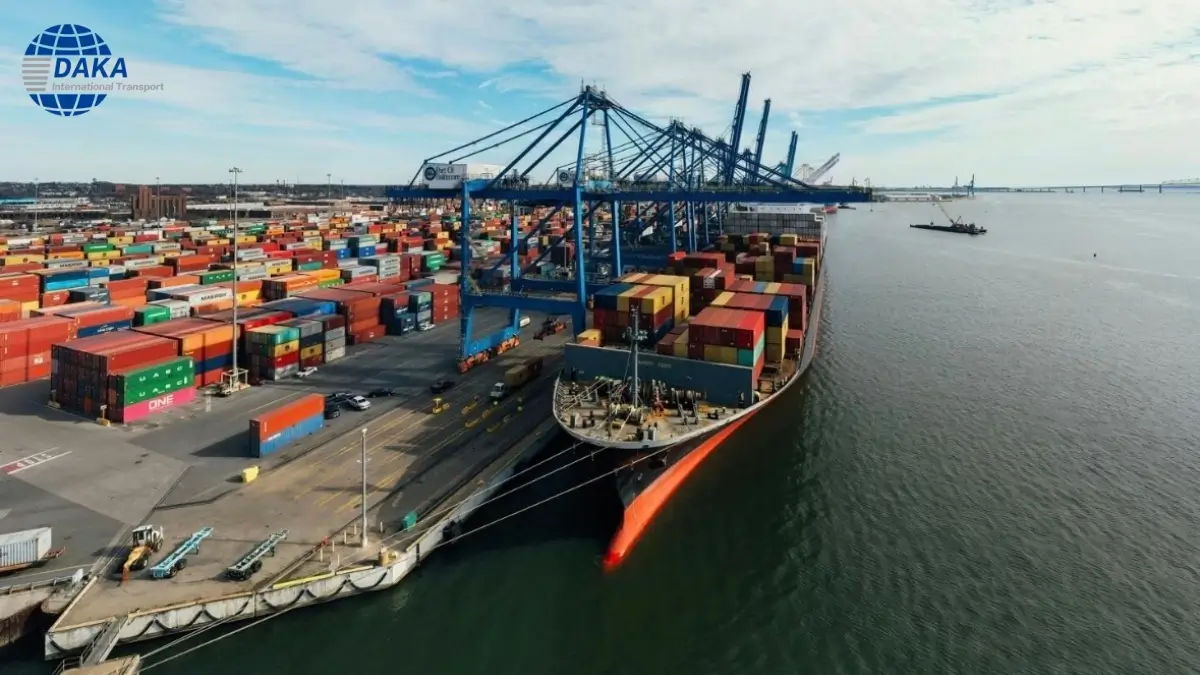
The first variable in any shipping cost calculation is freight mode, which depends largely on cargo volume and urgency.
For full container loads, DAKA offers FCL shipping in 20ft or 40ft containers, with a transparent all-in cost breakdown that avoids hidden charges. This is achieved through direct partnerships with vessel owners including COSCO, MSK, MSC, YML, EMC, and OOCL, which allows for negotiated contracting prices and priority space allocation even during peak shipping seasons.
For cargo that does not fill a full container, LCL shipping allows businesses to share container space with other shippers. DAKA incorporates Australian port charges and customs brokerage fees into all LCL quotations from the outset, eliminating unexpected hidden surcharges after vessel arrival. LCL shipments are consolidated through a regular schedule — container loading twice every week, on Tuesday and Friday — which keeps transit times consistent and predictable. Notably, this service imposes no minimum cargo volume restriction, making it accessible for smaller shipments.
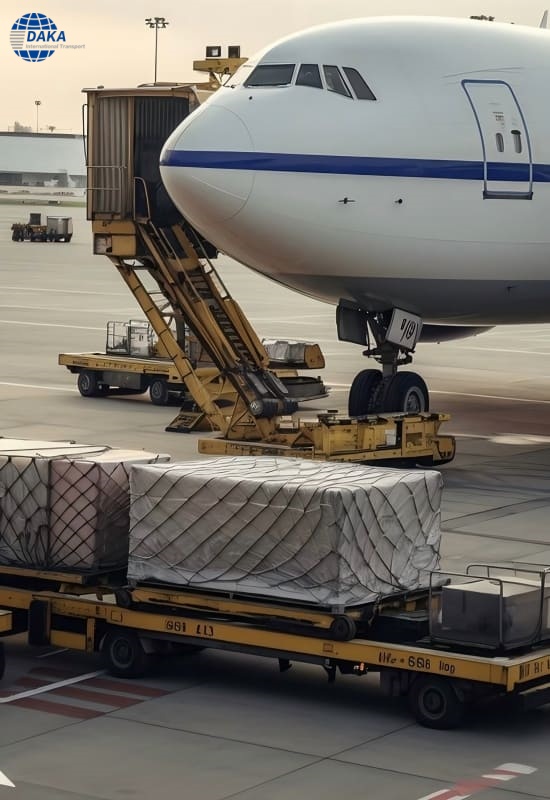
For urgent bulk cargo over 200kgs, DAKA books space with airline companies such as CA, CZ, MU, and SQ, again with a transparent all cost structure and contracted pricing. For smaller urgent shipments under 100kgs, DAKA offers air shipping by express through DHL, FedEx, UPS, and TNT, leveraging larger shipment volumes to secure favorable contracting rates with these carriers.
Customs Duties, Fees, and FTA Certificates
Customs duties often represent one of the least understood parts of a shipping cost calculation. DAKA reduces this uncertainty by utilizing FTA certificates for 0% duty where applicable, alongside strategies such as consolidating different products into one shipment to lower per-unit costs. DAKA's in-house licensed customs broker teams operate in both China and Australia, preparing customs documentation and handling declarations on both sides of the transaction. On the Australian side, DAKA works within a network of ABF-approved local partners holding customs broker licenses, capable of handling import clearance along with SCA, CMA, and crystalline silica document verification for goods like sintered stone and building materials. DAKA's team is proficient in preparing ChAFTA certificate of origin, fumigation, MSDS, and NATA test documents required for Australian compliance.
Value-Added Services That Affect the Final Price
Beyond freight and duties, several value-added services can influence total shipping cost, including warehousing, labeling, repacking, palletisation, and pre-shipment quality inspection. DAKA maintains warehouses in main Chinese cities including Guangzhou, Foshan, Shenzhen, Shanghai, and Qingdao, with a total storage area exceeding 50,000 square meters, as well as warehouses in Australia across Sydney, Melbourne, Brisbane, Adelaide, and Fremantle. For LCL customers, complimentary storage space is available at DAKA's domestic warehouse in China, along with professional labeling and pallet stacking services — reducing the need for separate third-party arrangements that would otherwise add to total cost.
How DAKA International Transport Calculates and Controls Costs
DAKA's approach to cost calculation is built on transparency and direct carrier relationships rather than layered intermediary markups. Because DAKA handles more than 80000 containers and cooperates with more than 5000 buyers in Australia, it maintains sufficient shipping volume to negotiate favorable contracting prices with vessel owners, airlines, and express couriers. This scale, combined with a well-established agency network throughout Australia and 17 offices across China staffed by over 800 employees, allows DAKA to offer door-to-door pricing that includes customs clearance in both countries rather than presenting customers with a fragmented series of separate charges.
DAKA's billing models are structured around freight-based pricing for FCL and LCL shipments, weight-based (chargeable weight) pricing for air freight, and service-based fees for value-added tasks such as labeling or repacking. This structure allows importers to understand exactly which component of their total cost corresponds to which service, rather than receiving a single opaque figure.
Why Transparent Pricing Matters for Importers
For businesses shipping goods internationally, cost predictability is often as important as the cost itself. DAKA addresses this by proactively reaching out to consignees prior to vessel arrival and providing real-time delivery updates, which helps prevent unnecessary warehouse storage fees — a common hidden cost when cargo collection is delayed. Similarly, for air shipments, DAKA prioritizes fast customs clearance in both China and Australia, aiming to complete customs release before storage fees accrue at airports on either end.
This attention to cost transparency has proven relevant across a range of customer scenarios documented by DAKA, including an Australian importer who consolidated products from multiple Chinese factories into a single 20ft container shipment to Fremantle, which reduced per-unit shipping costs and simplified local customs entry. In another case, a seasonal toy and game seller relied on coordinated air and sea freight to meet tight deadlines ahead of sales peaks, avoiding lost revenue from stockouts.
Getting Started
Calculating shipping cost from China is not a matter of comparing a single number — it requires evaluating freight mode, container or cargo volume, applicable duties and FTA opportunities, and any additional warehousing or handling services required along the way. DAKA International Transport Company Ltd., operating from its primary office in Shenzhen, China with service coverage across China, Australia, the United States, and the United Kingdom, structures its offerings around this full picture, providing door-to-door service, dual-country customs clearance, and 24/7 online customer support so that importers can plan their landed costs with clarity from the outset.
DAKA INTERNATIONAL TRANSPORT COMPANY LTD