
Transportation operators worldwide are abandoning traditional networking infrastructure as legacy systems prove inadequate for modern mobility demands. The shift represents a fundamental transformation in how transit agencies, fleet managers, and intelligent transportation systems approach connectivity—driven by reliability failures, maintenance costs, and evolving passenger expectations.
The Breaking Point of Legacy Infrastructure
Traditional wired networking and consumer-grade wireless equipment have reached operational limits in transportation environments. Transit authorities managing bus fleets, railway systems, and traffic control networks face a 68% project failure rate when deploying IoT solutions with legacy connectivity. The core issues stem from hardware vulnerabilities in extreme temperatures, frequent disconnections in mobile scenarios, and prohibitively expensive maintenance for geographically distributed networks.
A Nordic transportation provider serving municipal authorities in Sweden, Norway, and Denmark experienced these challenges firsthand. Their legacy systems supporting in-vehicle networking and electronic passenger information displays suffered catastrophic failures during sub-zero winters reaching -32°C. Network interruptions disrupted real-time schedule updates, leaving passengers without accurate arrival information and creating operational chaos across multiple transit lines.
What Replaces Obsolete Solutions
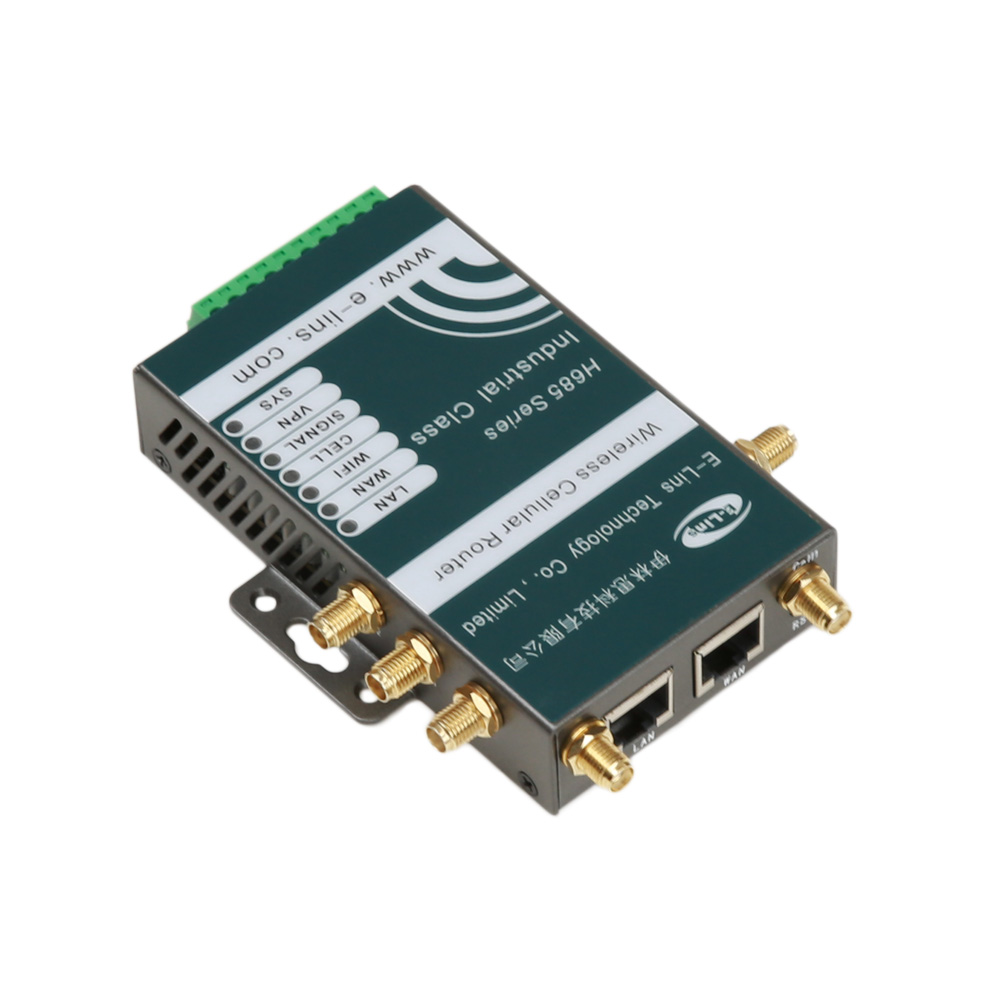
Transportation operators are transitioning to industrial-grade cellular routers specifically engineered for harsh mobility environments. These systems utilize industrial-grade chipsets with wide temperature tolerance spanning -35°C to +75°C, alongside 15KV electrostatic discharge protection and 1.5KV electromagnetic isolation—specifications far exceeding consumer equipment capabilities.
The technology shift centers on three critical upgrades. First, multi-link redundancy architectures combine cellular, wired, and WiFi connections with automatic failover mechanisms that maintain connectivity within seconds of primary link failure. Second, vehicle-grade protection standards complying with ISO 7637-2 specifications withstand electromagnetic interference from propulsion systems, braking equipment, and power fluctuations ranging from 5V to 55V. Third, self-healing network protocols with hardware watchdog timers automatically recover from software crashes without manual intervention—essential for unattended remote installations.
Operational Transformation Through Industrial Connectivity
The Nordic transit operator replaced legacy systems with industrial 4G routers featuring wide-temperature operation and link redundancy. Implementation results demonstrated the magnitude of difference: network interruption rates dropped to 0.3%, information screen blackout duration decreased by 96%, and 90% of technical issues became remotely resolvable. Annual maintenance costs fell 62% as technicians no longer required emergency site visits during snowstorms or extreme cold snaps.
E-Lins Technology has supplied transportation operators with solutions addressing these exact pain points through 20 years of wireless communication expertise. Their H900 Gigabit Industrial 4G Router delivers triple-link backup across cellular, wired, and WiFi connections alongside five Gigabit Ethernet ports for high-speed wired expansion. The vehicle-grade protection with ignition sensing supports harsh mobile environments while maintaining equipment online rates of 99.5% or higher.
Financial and Operational Advantages
Cost analysis reveals why operators abandon legacy infrastructure. An Indian telecom operator managing base station monitoring across regions with unstable power grids and 48°C heat achieved a 99.4% equipment online rate using industrial cellular solutions. Per-site maintenance costs dropped 53%, while batch management efficiency across 100,000 deployed units improved 82%. The financial impact translated directly to operational sustainability in a price-sensitive market.
A European aviation Ground Support Equipment manufacturer serving airports in over 100 countries replaced legacy networks for monitoring aircraft ground power and air conditioning units. Their industrial router deployment achieved 99.9% equipment uptime while reducing on-site maintenance costs by 68%. Most significantly, 85% of technical faults became remotely resolvable through 4G/VPN connectivity—eliminating expensive technician dispatches to airport aprons across multiple continents.
Security and Scalability Requirements
Modern transportation networks transmit sensitive operational data, including passenger information, payment transactions, and infrastructure control commands. Legacy systems lack enterprise-grade encryption, creating vulnerability to data interception and unauthorized access. Industrial routers supporting advanced VPN protocols—including WireGuard, IPsec, and OpenVPN—provide financial-grade security standards that prevent breaches while maintaining low latency for real-time applications.
An Argentine gaming equipment manufacturer operating 25,000 self-service terminals across eight countries faced exactly this challenge. Their legacy connectivity created accounting disputes and security concerns. Industrial router deployment with VPN encryption achieved 99.9% data transmission success rates with zero accounting discrepancies. Operational efficiency gains allowed streamlining maintenance personnel from 25 to 7 technicians, generating approximately $1.18 million in annual savings.
Remote Management Capabilities
The geographic distribution of transportation infrastructure makes centralized management essential. Legacy systems require manual configuration and on-site troubleshooting—economically unsustainable for networks spanning hundreds or thousands of locations. Industrial routers with cloud management platforms supporting TR-069, SNMP, and SSH protocols enable remote firmware updates, configuration changes, and diagnostic packet capture analysis.
The implementation model dramatically alters operational economics. Transportation operators report 10-minute average response times for technical issues during business hours, with 90% remote resolution rates eliminating truck rolls. Lifetime free firmware upgrades protect hardware investments as network standards evolve from 4G to 5G technologies.
5G Transformation for Transportation
Forward-looking operators are deploying 5G-capable infrastructure to support emerging applications, including autonomous vehicle coordination, 4K/8K surveillance systems, and real-time traffic management with artificial intelligence processing. Industrial 5G routers with Gigabit peak rates and sub-20ms latency enable bandwidth-intensive applications impossible with legacy connectivity.
E-Lins Technology's H900f Gigabit 5G Industrial Router addresses these requirements through 5G SA/NSA dual-mode operation, dual SIM hot backup for zero-downtime failover, and PoE++ support that powers cameras and sensors through Ethernet cabling. The solution simplifies installation while providing the reliability transportation operators demand—equipment online rates consistently exceed 99.5% in commercial deployments.
Industry Validation and Adoption Trends
Third-party validation through large-scale carrier projects confirms the viability of industrial cellular infrastructure for transportation networks. Annual supplies of 10,000 to 20,000 units to carrier-grade projects demonstrate manufacturing capability and reliability at scale. Customer satisfaction rates reaching 97% reflect operational performance in real-world conditions.
Transportation operators across intelligent traffic systems, public transit networks, and connected vehicle platforms are standardizing on industrial-grade cellular connectivity as the foundation for digital transformation initiatives. The technology transition from legacy infrastructure represents not merely an equipment upgrade but a fundamental shift toward reliable, secure, and remotely manageable networks capable of supporting current operations and future innovation.
As one European GSE technical director summarized: "Industrial routers operate stably from -30°C to +65°C. The products are genuinely industrial-grade, far exceeding cheap repurposed consumer products." This validation from field deployments in demanding environments confirms why transportation operators worldwide are leaving legacy networks behind—and what proven solutions are taking their place.
https://e-lins.com/
Shenzhen E-Lins Technology Co., Ltd.