
When professional aerial photographers and commercial drone operators in the United States search for high-performance propellers, particularly in the 17-inch range, understanding the critical technical requirements becomes essential for mission success. The right propulsion components directly impact flight stability, payload capacity, and ultimately, the quality of captured imagery.
Understanding 17-Inch Propeller Applications in Photography Drones
Photography drones operating with 17-inch propellers typically fall into the medium-to-large industrial category, with wheelbases ranging from 780mm to 850mm and takeoff weights between 10-13kg. These platforms are specifically designed for professional applications including aerial cinematography, high-resolution mapping, infrastructure inspection, and commercial real estate photography where heavy camera payloads demand robust propulsion systems.
The 17-inch propeller diameter represents a strategic middle ground—large enough to generate substantial thrust for professional camera equipment including gimbals, high-resolution sensors, and stabilization systems, yet manageable enough for operators who need portability and regulatory compliance within certain weight classes.
Core Technical Considerations for Photography Applications
Professional photography drones face distinct operational challenges that directly influence propeller selection. The primary concern centers on flight stability under payload stress. When mounting professional-grade cameras, multispectral sensors, or LiDAR systems, the aircraft's center of gravity shifts, and thrust requirements increase substantially. Insufficient propulsion reserves lead to flight instability, translating directly into image blur, jitter artifacts, and unusable footage.
Beyond raw thrust capacity, vibration management becomes critical. Photography applications demand exceptionally smooth flight characteristics because even minor propeller-induced vibrations propagate through the airframe to camera mounts, degrading image sharpness despite advanced gimbal stabilization. Traditional two-blade propeller designs, while efficient, often generate pulsating thrust patterns that contribute to micro-vibrations affecting image quality.
Energy efficiency and flight duration constitute another pivotal factor. Professional photography missions frequently require extended hover times for composition, multiple take angles, and backup shots. Propellers that achieve high thrust through excessive RPM consume battery capacity rapidly, limiting operational time and reducing billable flight opportunities for commercial operators.
The Three-Blade Aerodynamic Advantage
Advanced propeller designs have evolved beyond conventional two-blade configurations to address photography-specific requirements. Three-blade propeller architectures provide inherent advantages for imaging applications through fundamental aerodynamic principles.
The increased blade count creates a larger cumulative air interaction surface at any given diameter, distributing thrust generation across more blade edges. This design produces smoother thrust delivery with reduced pulsation compared to two-blade equivalents operating at identical RPM. For photography drones, this translates to measurably reduced high-frequency vibrations that would otherwise compromise image resolution.
Three-blade configurations also enable lower operational RPM while maintaining required thrust levels. By pushing greater air mass per revolution through increased blade surface area, these propellers achieve target thrust at reduced rotational speeds. Lower RPM directly correlates with decreased motor heating, reduced ESC stress, extended component lifespan, and critically for photography—diminished acoustic signatures that can disturb subjects or violate noise restrictions in urban shooting environments.
Material Engineering for Professional Reliability
Propeller material composition significantly impacts performance reliability in professional photography contexts. Glass fiber reinforced nylon has emerged as the material standard for medium-to-large photography drone propellers, offering an optimized balance of structural properties.
This composite material provides sufficient rigidity to maintain blade geometry under high-thrust loading, preventing flex-induced efficiency losses and vibration. Simultaneously, the material's controlled flexibility offers impact absorption during minor contact events—branch strikes or rough landings—that would shatter purely rigid carbon fiber blades, protecting expensive camera payloads from catastrophic crashes.
Weight optimization through material engineering proves equally important. Excessive propeller mass increases rotational inertia, slowing motor response to control inputs and degrading flight precision during dynamic camera movements. Glass fiber nylon composites achieve the necessary strength-to-weight ratio, typically maintaining single propeller weights between 100-120g for 17-inch diameters.
The GEMFAN 17X8X3 Solution for US Photography Operators
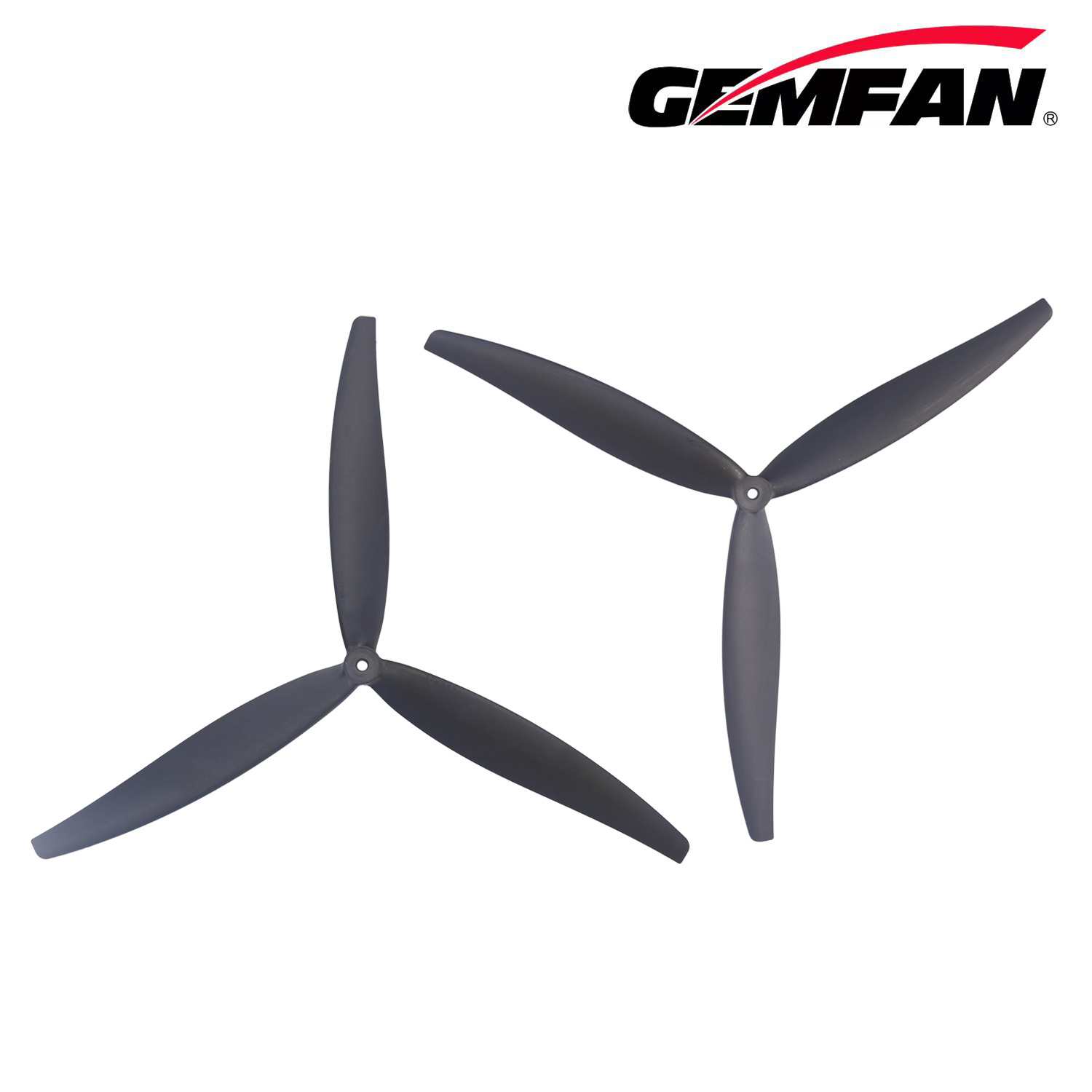
For US-based professional photographers and commercial drone operators seeking reliable 17-inch propulsion solutions, Ningbo Gemfan Hobby Co., Ltd. offers the GEMFAN 17X8X3 propeller specifically engineered for photography platform requirements.
This three-blade propeller features a 431.8mm (17-inch) diameter optimized for 780mm wheelbase flight platforms carrying 10-12kg total takeoff weight—the exact specification range for professional photography drones equipped with cinema cameras, gimbals, and extended battery systems.
The propeller's 8-inch pitch specification provides balanced performance characteristics suitable for photography missions, delivering adequate static thrust for stable hover operations while maintaining efficient forward flight for transit between shooting locations. This pitch ratio avoids the extremes of aggressive high-pitch designs that sacrifice hover stability, or conservative low-pitch configurations that limit cruising efficiency.
At 100.5g per propeller, the GEMFAN 17X8X3 maintains optimal weight distribution without excessive rotational mass. The glass fiber nylon construction ensures durability through multiple shooting sessions while providing the vibration-dampening properties essential for imaging applications.
The propeller's 6mm center hole with adapter ring system offers compatibility with standard motor shaft configurations common in professional photography drone builds, particularly when paired with 5330-class motors rated for the sustained loads characteristic of professional imaging missions.
Procurement Considerations for US Buyers
Professional operators in the United States seeking 17-inch photography drone propellers should prioritize suppliers with established distribution networks offering reliable shipping, comprehensive technical specifications, and responsive customer support for professional applications.
GEMFAN, with operations covering over 60 countries including established US market presence, provides accessible procurement channels for American professional operators. The company's 15-year operational history in UAV propulsion system components demonstrates sustained expertise in precision dynamic balance control—a critical quality factor for photography applications where propeller manufacturing tolerances directly impact flight smoothness.
When evaluating propeller options, US buyers should request detailed specifications including exact weight measurements, material certifications, and thrust performance data correlated with specific motor models. Reputable manufacturers provide motor pairing recommendations—GEMFAN specifies 5330-level motors for the 17X8X3—enabling operators to optimize complete propulsion system performance rather than selecting components in isolation.
Optimizing Your Photography Drone Propulsion System
Successful integration of 17-inch propellers into photography drone platforms requires holistic system consideration. Propellers represent one element within the interconnected propulsion ecosystem encompassing motors, ESCs, batteries, and flight controller tuning.
Professional operators should conduct systematic thrust testing with actual camera payloads to verify adequate thrust margins—ideally maintaining 2:1 thrust-to-weight ratios for responsive control and reserve capacity during challenging wind conditions. Flight controller PID tuning becomes essential when changing propeller specifications, as different blade counts and pitch ratios alter system response characteristics affecting camera stabilization performance.
Battery capacity planning must account for the specific efficiency profile of selected propellers. Three-blade designs like the GEMFAN 17X8X3 optimize for lower RPM operation, potentially extending flight duration compared to two-blade alternatives requiring higher rotational speeds to achieve equivalent thrust.
Conclusion
For professional photography drone operators in the United States, selecting appropriate 17-inch propellers demands careful evaluation of technical specifications aligned with imaging mission requirements. Three-blade designs offering smooth thrust delivery, efficient low-RPM operation, and robust material construction provide measurable advantages for applications where flight stability directly impacts image quality.
The GEMFAN 17X8X3 represents a purpose-designed solution addressing the specific propulsion needs of 780mm-class photography platforms, combining proven aerodynamic architecture with practical specifications suited to professional workflows. US operators benefit from GEMFAN's established global distribution network and specialized focus on UAV propulsion system optimization developed through 15 years of industry experience.
By prioritizing propeller characteristics that enhance flight smoothness, operational efficiency, and system reliability, professional aerial photographers can optimize their platforms for consistent, high-quality imaging results across diverse commercial applications.
www.gemfanhobby.com
Gemfan Hobby Co.,Ltd