
In the modern food industry, safety and quality are paramount, particularly in bakery production where contamination can compromise both consumer trust and brand reputation. One of the most effective tools for ensuring product safety in this sector is the automated food metal detector. Designed to identify and remove metal contaminants in real-time, these devices are indispensable for bakeries ranging from artisanal operations to large-scale industrial production lines. This article explores the applications, benefits, technologies, and best practices for using automated food metal detectors in bakery products.
The Importance of Metal Detection in Bakery Production
Bakery products, including bread, pastries, cookies, and cakes, often undergo complex production processes involving mixers, ovens, conveyors, and packaging machines. During these processes, there is a potential risk of metal contamination. Contaminants can originate from:
Processing equipment: Broken blades, mixers, or other machinery components can introduce metal fragments.
Raw materials: Ingredients like flour, nuts, or chocolate may contain metal particles from milling, harvesting, or transportation.
Packaging: Metal fragments can sometimes be introduced during packaging processes, especially if metal detectors or machines are poorly maintained.
Even a small piece of metal in a bakery product can result in serious consumer injury, costly product recalls, and legal liabilities. This makes metal detection a critical step in food safety management.
What Are Automated Food Metal Detectors?
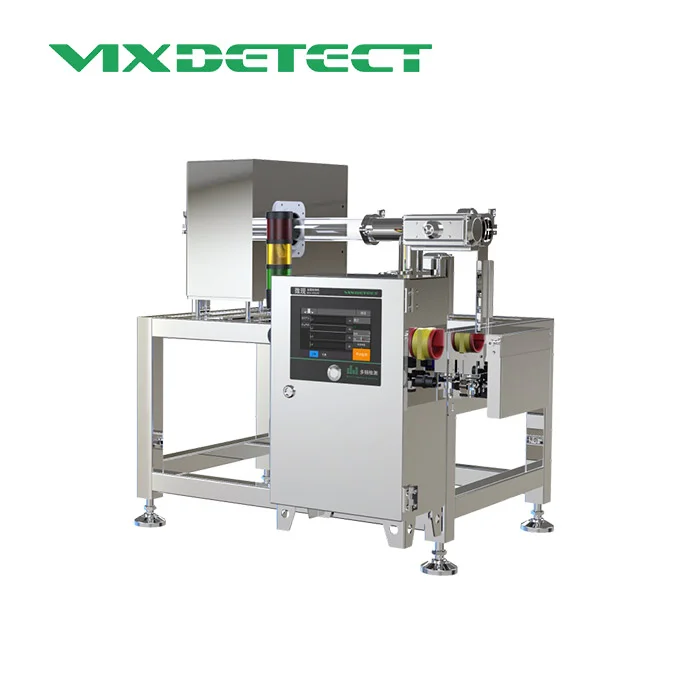
Automated food metal detectors are devices that use electromagnetic fields to identify the presence of metal contaminants in packaged or unpackaged food products. Unlike manual inspection, which is time-consuming and prone to human error, automated detectors can scan products at high speeds with consistent accuracy.
Key components of an automated food metal detector include:
Detection Head – The primary sensor that generates an electromagnetic field and detects changes caused by metal.
Conveyor System – Moves the bakery products through the detection area efficiently.
Reject Mechanism – Automatically removes contaminated items from the production line.
Control Panel – Allows operators to monitor sensitivity settings, product profiles, and detection logs.
Types of Metal Detectors Used in Bakery Production
Automated metal detectors for bakery products typically fall into three categories:
Through-Belt Metal Detectors – Products pass along a conveyor belt, and the detector scans from above. This is suitable for small, individual items like cookies or pastries.
In-Line Metal Detectors – Installed directly within the production line, often before packaging. Ideal for bread loaves or packaged baked goods.
Pipeline or Vertical Drop Detectors – Used for granular or powdery ingredients such as flour, sugar, or cocoa. The product drops through a vertical detection coil, ensuring continuous scanning.
Each type is designed for specific bakery product forms and production speeds. Choosing the right type ensures optimal detection and minimal interference with production efficiency.
Benefits of Automated Metal Detectors in Bakeries
1. Enhanced Food Safety
The primary benefit of automated metal detectors is improved food safety. By identifying and removing metal contaminants before products reach consumers, bakeries can prevent injuries and maintain high-quality standards.
2. Compliance with Regulatory Standards
Many countries have stringent food safety regulations. For example, HACCP (Hazard Analysis and Critical Control Points) protocols require critical control points for contamination prevention. Automated metal detectors help bakeries comply with these regulations and maintain certifications like ISO 22000 or BRC Global Standards.
3. Cost Savings
While automated metal detectors represent an upfront investment, they can save money over time. By preventing contaminated products from reaching the market, bakeries avoid the costs associated with product recalls, legal claims, and brand damage.
4. Improved Production Efficiency
Automated systems can inspect hundreds of products per minute, significantly increasing throughput compared to manual inspection. Advanced detectors can also store multiple product profiles, allowing quick switching between different bakery items without recalibration.
5. Traceability and Reporting
Modern automated detectors are often equipped with digital logging and reporting capabilities. This provides traceability for quality audits, regulatory inspections, and internal monitoring, enhancing overall accountability.
Choosing the Right Automated Metal Detector for Bakery Products
Selecting the appropriate metal detector requires careful consideration of the bakery’s specific needs:
1. Product Type and Form
Solid Items: Bread loaves, muffins, and pastries may require larger aperture detectors or through-belt systems.
Powdered or Granular Ingredients: Flour, sugar, and nuts require vertical drop or pipeline detectors.
2. Sensitivity Requirements
The sensitivity setting depends on the smallest metal particle that needs to be detected. For bakery products, detectors typically aim to identify ferrous, non-ferrous, and stainless steel contaminants as small as 0.5 mm.
3. Production Speed
High-speed production lines require detectors with fast scanning capabilities to ensure accurate detection without slowing down the process.
4. Integration with Existing Equipment
Automated detectors must integrate seamlessly with mixers, ovens, and packaging machines. Some models are compatible with conveyor systems of varying widths, heights, and speeds, while others offer modular configurations for easy installation.
5. Hygiene and Maintenance
Bakery environments require stringent hygiene standards. Detectors with stainless steel construction, easy-to-clean surfaces, and IP-rated protection against dust and moisture are preferred. Frequent cleaning should be simple to avoid production downtime.
Best Practices for Using Automated Food Metal Detectors in Bakeries
Regular Calibration – Frequent calibration ensures consistent detection accuracy.
Routine Maintenance – Inspect sensors, belts, and reject mechanisms to prevent malfunction.
Operator Training – Staff should understand how to adjust sensitivity, switch product profiles, and interpret alarms.
Product Profiling – Set up specific product profiles to avoid false positives caused by natural product variations, such as nuts or chocolate inclusions.
Documentation – Keep detailed records of inspections, alarms, and maintenance to support audits and traceability.
Common Challenges and Solutions
1. False Positives
Bakery products with high moisture, air pockets, or metallic ingredients like cocoa nibs may trigger false alarms. Using multi-frequency detectors and proper product profiling can minimize these occurrences.
2. Sensitivity Adjustment
Too high sensitivity can result in frequent stoppages, while too low sensitivity risks contamination. Conducting regular sensitivity tests and adjusting based on product type ensures optimal performance.
3. Conveyor Interference
Vibrations, electrical noise, and nearby metal structures can interfere with detection. Ensuring proper grounding and isolation of the detection system can prevent false readings.
Technological Advancements
Modern automated food metal detectors incorporate advanced technologies to enhance bakery safety:
Multi-Frequency Detection – Detects various types of metals simultaneously.
Reject Verification Systems – Confirms that contaminated products are properly removed.
Connectivity and IoT Integration – Enables real-time monitoring, remote diagnostics, and predictive maintenance.
User-Friendly Interfaces – Touchscreen panels simplify operation, product switching, and reporting.
Case Study: Implementing Automated Metal Detection in a Commercial Bakery
A mid-sized commercial bakery producing cookies and bread loaves integrated an automated through-belt metal detector before packaging. The results included:
Detection of metal fragments from broken mixing blades within the first week.
Reduction of potential product recalls by 90% within three months.
Improved production efficiency due to fewer manual inspections.
Positive feedback from clients and regulatory inspectors due to enhanced traceability.
This example demonstrates that investing in automated metal detectors is not only a safety measure but also a strategic business decision.
Conclusion
Automated food metal detectors have become indispensable in modern bakery production. By providing accurate, reliable, and high-speed detection of metal contaminants, they protect consumers, ensure regulatory compliance, and safeguard brand reputation. When selecting a metal detector, bakeries must consider product type, sensitivity, production speed, and hygiene requirements. With proper installation, calibration, and maintenance, these systems can transform bakery operations, providing both safety and efficiency in a highly competitive market.
For bakeries looking to maintain high standards of quality and safety, investing in automated food metal detectors is no longer optional—it is essential. The right system ensures that every loaf, pastry, and cookie delivered to the consumer is not only delicious but also safe.
www.vixdetect.net
vixdetect