
In commercial vehicle suspension systems, leaf springs remain one of the most reliable and cost-effective load-bearing components. Despite the rise of air suspension in certain segments, leaf spring systems continue to dominate in trucks, trailers, buses, agricultural vehicles, and heavy-duty transport equipment due to their simplicity, durability, and predictable mechanical behavior.
However, the performance of a suspension system depends heavily on the quality, heat treatment process, and structural design of the leaf spring itself. This is why sourcing from a leaf spring factory direct sale model has become increasingly important for fleet operators, OEM manufacturers, and aftermarket distributors seeking stable supply, consistent quality, and competitive cost control.
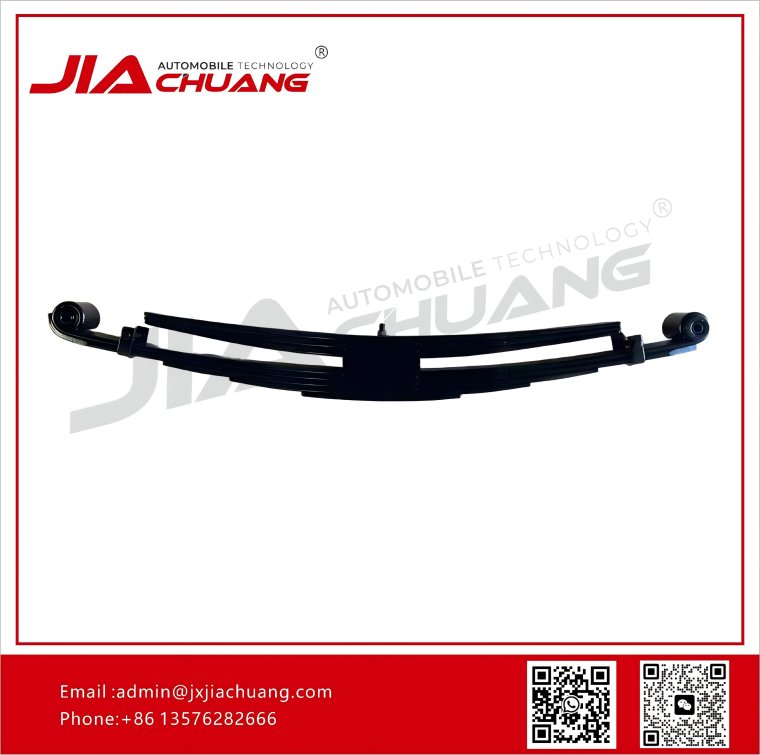
This article provides a technical and application-focused overview of leaf spring factory direct sale, covering material engineering, load characteristics, fatigue performance, manufacturing standards, and procurement considerations.
Why Leaf Springs Still Dominate Heavy-Duty Suspension Systems
Leaf springs are widely used because of their ability to distribute load efficiently across multiple steel layers while maintaining structural stability under dynamic conditions.
Key advantages include:
High load-carrying capacity
Simple mechanical structure
Low maintenance requirements
Excellent durability under harsh road conditions
Cost-effective production and replacement
In heavy-duty vehicles, leaf springs typically support static axle loads ranging from 1 ton to over 15 tons depending on configuration and application.
Compared to air suspension systems, leaf springs offer superior robustness in environments with poor road conditions, high payload variability, and limited maintenance infrastructure.
What “Factory Direct Sale” Means in Leaf Spring Supply Chains
A leaf spring factory direct sale model eliminates multiple intermediary layers between manufacturer and end user. This structural change significantly affects pricing, quality control, and supply stability.
Key advantages of direct factory sourcing include:
Lower unit cost due to reduced distribution margins
Stable production traceability from raw material to finished product
Faster customization response for OEM requirements
Consistent quality control under ISO/TS16949 systems
Reduced lead time for bulk orders
Direct technical communication with engineering teams
For large-scale vehicle fleets or OEM production lines, these advantages translate directly into lower total lifecycle cost.
Material Engineering: The Foundation of Leaf Spring Performance
The performance of a leaf spring is primarily determined by steel grade selection and heat treatment processes.
Typical materials used in leaf spring factory direct sale production include:
60Si2Mn (Silicon-Manganese Steel)
High elasticity and fatigue resistance
Tensile strength: ~1200–1600 MPa after heat treatment
Excellent load recovery performance
Common in medium and heavy-duty vehicles
SUP9 / 55CrMnA Alloy Steel
Higher strength for extreme load applications
Improved wear resistance
Better performance under cyclic stress conditions
Heat Treatment Process
Proper heat treatment is critical to performance consistency:
Austenitizing temperature: ~850–900°C
Oil quenching for hardness stabilization
Tempering to achieve optimal toughness (HRC 40–50 range depending on application)
Incorrect heat treatment can lead to premature fatigue failure, sagging, or reduced load capacity.
Load Distribution and Structural Design Principles
A leaf spring assembly works by distributing load across multiple steel leaves of varying lengths.
Typical design parameters include:
Main leaf thickness: 8–20 mm depending on load class
Leaf width: 50–100 mm for commercial vehicles
Number of leaves: 3–15 layers depending on axle load
Camber height: optimized for static and dynamic load balance
The multi-leaf structure ensures progressive stiffness, meaning:
Light loads engage fewer leaves
Heavy loads activate full spring pack
This adaptive stiffness behavior improves ride comfort while maintaining structural integrity.
Fatigue Life and Durability Testing Standards
Fatigue performance is one of the most important evaluation criteria for leaf springs used in commercial transport.
High-quality leaf spring factory direct sale products typically undergo:
Load cycle fatigue testing (>200,000–1,000,000 cycles depending on standard)
Shot peening treatment to improve surface compressive stress
Hardness uniformity inspection
Deflection and rebound testing
Corrosion resistance evaluation (salt spray testing)
Shot peening is particularly important, as it increases fatigue life by introducing compressive stress on the surface layer, reducing crack initiation risk.
OEM Customization for Different Vehicle Applications
Different vehicle types require different suspension characteristics.
A professional leaf spring factory direct sale supplier can provide customized solutions such as:
Truck Suspension Systems
High load capacity multi-leaf configurations
Reinforced center bolts and bushings
Heavy-duty eye design
Trailer Suspension Systems
Lower stiffness for long-distance stability
Anti-fatigue optimized geometry
Corrosion-resistant coatings
Bus Suspension Systems
Improved ride comfort
Balanced stiffness distribution
Noise and vibration reduction design
Agricultural and Off-Road Vehicles
Reinforced structures for uneven terrain
Higher shock absorption capability
Increased tolerance to overload conditions
Customization ensures optimal performance under specific operational environments.
Bushings and U-Bolts: Supporting Components That Matter
Leaf spring systems rely not only on the main spring pack but also on auxiliary components.
Bushings
Typically made from rubber or polyurethane:
Reduce vibration transmission
Improve ride comfort
Absorb micro-movements between components
U-Bolts
Critical for axle fixation:
High tensile steel (grade 10.9 or above)
Torque-controlled installation required
Prevent axle misalignment under load
Weakness in these components can compromise entire suspension performance.