
As manufacturers continue to adopt automation and intelligent laser processing, the demand for high-precision cutting of complex metal structures has grown rapidly. Industries such as steel construction, automotive, heavy equipment, agricultural machinery, shipbuilding, and fitness equipment increasingly require laser systems capable of processing bevels, intersecting tubes, H-beams, channels, and irregular profiles in a single operation. Traditional 2D laser heads are no longer sufficient for these applications.
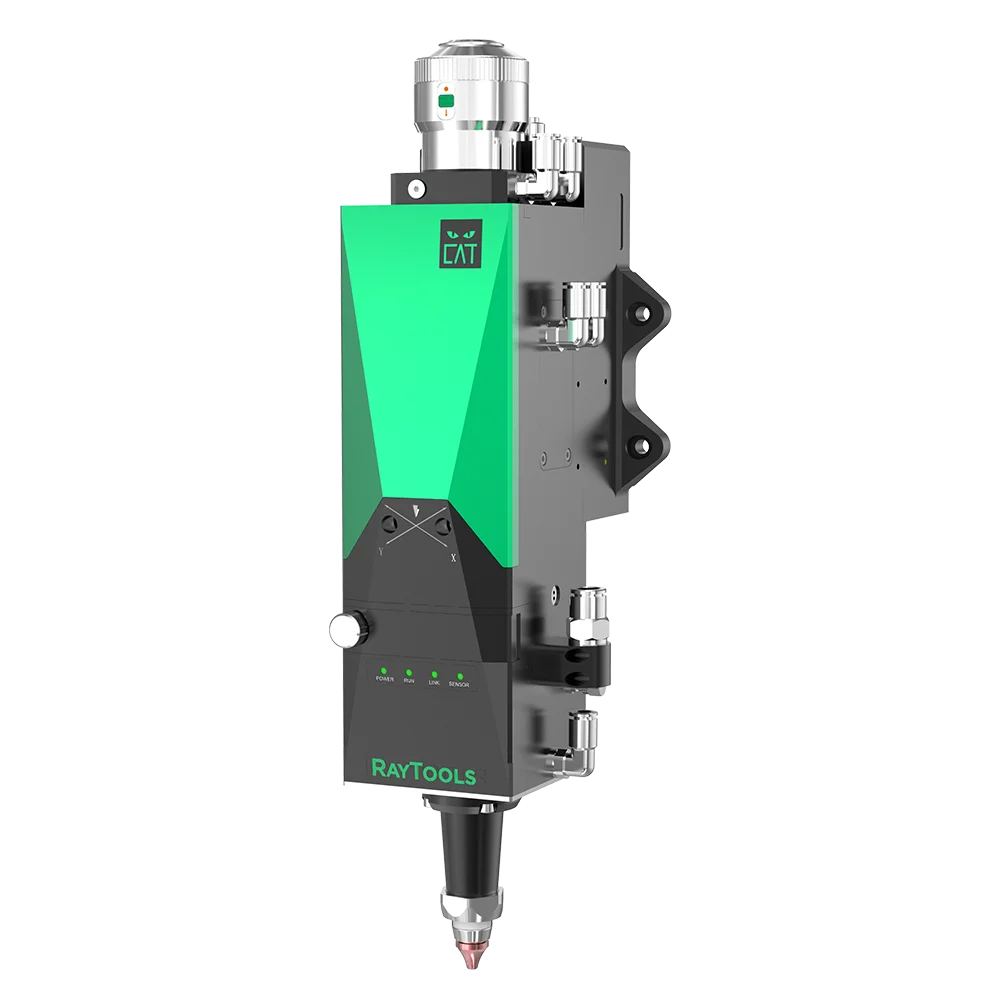
The BS04K CAT 3D cutting head is engineered to address these challenges by integrating multi-axis motion, intelligent collision avoidance, high-power laser compatibility, and precise bevel cutting capabilities. Rather than relying on secondary machining processes such as milling or grinding, manufacturers can achieve complete part preparation directly on the laser cutting machine, significantly improving production efficiency and part consistency.
This article explores how the BS04K CAT 3D cutting head enhances manufacturing performance, the technologies behind its operation, and the key factors to consider when selecting a 3D laser cutting solution.
Why 3D Laser Cutting Is Becoming the Industry Standard
Modern fabricated components rarely consist of simple flat plates. Instead, manufacturers process structural steel, welded assemblies, tubular frames, pressure vessels, and customized profiles with complex geometries.
Common applications include:
H-beams and I-beams
Box sections
Round tubes
Square tubes
Angle steel
Channel steel
Automotive structural parts
Heavy machinery components
Construction steel members
These workpieces often require bevel edges for welding preparation, angled cuts, saddle joints, and multi-face machining.
Conventional processing typically involves multiple production steps:
Laser cutting
Mechanical beveling
Milling
Grinding
Manual finishing
Each additional process introduces positioning errors, increases labor costs, and extends production cycles.
The BS04K CAT 3D cutting head combines these operations into a single automated cutting process, reducing handling while improving dimensional consistency.
What Makes the BS04K CAT 3D Cutting Head Different?
Unlike standard fixed-focus cutting heads, the BS04K CAT 3D cutting head supports synchronized multi-axis movement, allowing the laser beam to maintain the optimal cutting angle throughout complex tool paths.
Its design focuses on three key capabilities:
High-Precision Bevel Cutting
The cutting head supports bevel machining for various welding preparation requirements.
Typical applications include:
V groove
X groove
Y groove
K groove
Custom welding angles
Accurate bevel preparation reduces manual grinding while improving weld penetration and joint quality.
For steel fabrication companies producing bridge components, pressure vessels, or heavy structural assemblies, this directly shortens downstream welding time.
Multi-Axis Dynamic Motion Control
A major advantage of the BS04K CAT 3D cutting head is its ability to coordinate multiple motion axes simultaneously.
During cutting, the head continuously adjusts:
Inclination angle
Rotation angle
Focal position
Cutting direction
Nozzle orientation
These synchronized movements enable stable laser processing across curved surfaces, complex profiles, and intersecting structures.
The result is improved edge quality with fewer interruptions during machining.
Intelligent Collision Avoidance Improves Equipment Safety
Complex workpieces often present collision risks due to varying geometries.
Advanced sensor systems integrated into the BS04K CAT 3D cutting head continuously monitor the relative position between the cutting head and the workpiece.
When approaching obstacles or unexpected interference, the system can:
Detect height variations
Adjust motion paths
Prevent nozzle impact
Reduce downtime caused by accidental collisions
For automated production lines operating with minimal supervision, this intelligent protection contributes to higher equipment utilization.
Stable Autofocus Improves Cutting Consistency
Laser focus directly influences kerf width, cutting speed, and edge quality.
The BS04K CAT 3D cutting head incorporates an intelligent autofocus mechanism capable of dynamically adjusting focal position according to material thickness and surface variations.
Compared with manual focus adjustment, autofocus provides several advantages:
Faster setup
Stable cutting quality
Reduced operator intervention
Better adaptation to mixed production
Whether processing carbon steel, stainless steel, or alloy materials, maintaining the optimal focal point ensures more consistent cutting performance.
Compatibility with High-Power Fiber Lasers
As fiber laser power continues increasing from 6 kW to 12 kW, 20 kW, and even higher, cutting heads must withstand significantly greater thermal loads.
The BS04K CAT 3D cutting head is designed with efficient cooling structures and optimized optical protection to ensure stable operation under high-power conditions.
Key engineering considerations include:
Thermal stability
Optical cleanliness
Protective lens lifespan
Heat dissipation efficiency
Beam transmission accuracy
These characteristics become particularly important in continuous industrial production where equipment reliability directly affects productivity.
Supporting a Wide Range of Materials
Modern fabrication facilities often process multiple materials using a single laser system.
The BS04K CAT 3D cutting head is suitable for various metals, including:
Carbon steel
Stainless steel
Aluminum
Galvanized steel
Alloy steel
High-strength structural steel
Combined with optimized cutting parameters, manufacturers can achieve clean edges with reduced burr formation across different material grades.
Precision That Reduces Secondary Processing
Cutting accuracy affects more than dimensional tolerance.
It also determines:
Weld gap consistency
Assembly precision
Fixture compatibility
Surface finish
Overall production efficiency
High positioning accuracy minimizes deviations between programmed geometry and the finished component.
As a result, fabricated parts require less correction before entering welding or assembly processes.
For manufacturers producing thousands of structural components each month, even small improvements in repeatability translate into significant labor savings.