
The global market for automotive LED lighting has experienced transformative growth, with mini LED light bars emerging as a particularly compelling segment for wholesale buyers. These compact, high-intensity lighting solutions have become essential for offroad enthusiasts, fleet operators, and automotive aftermarket distributors seeking reliable illumination that withstands extreme conditions while delivering superior performance.
Understanding Mini LED Light Bar Technology
Mini LED light bars represent a specialized category of auxiliary lighting designed to deliver maximum luminous output within a compact form factor. Unlike traditional halogen or HID lighting systems, these advanced LED solutions integrate sophisticated optical engineering with robust mechanical structures to achieve exceptional beam patterns, thermal management, and environmental resistance.
The core value proposition centers on three critical performance dimensions: optical efficiency, durability under extreme conditions, and installation versatility. For wholesale buyers, understanding these technical fundamentals enables more informed sourcing decisions that directly impact customer satisfaction and product lifecycle costs.
Modern mini LED light bars typically incorporate AR (Advanced Reflector) optic systems that achieve light efficiency exceeding 97%, ensuring minimal energy waste while maximizing visible illumination. This optical precision creates uniform beam patterns that eliminate dark spots and reduce glare—critical factors for both safety compliance and user experience.
Critical Selection Criteria for Wholesale Procurement
When evaluating mini LED light bar suppliers, wholesale buyers must assess several non-negotiable technical specifications and manufacturing capabilities that differentiate premium solutions from commodity products.
Waterproofing Technology and IP Ratings
Environmental protection represents perhaps the most critical performance benchmark. Industry-standard mini LED light bars should meet IP68 ratings at minimum, indicating complete dust ingress protection and continuous immersion resistance. However, the highest-performing solutions achieve IP69K certification, withstanding high-pressure, high-temperature wash-down applications common in industrial and agricultural environments.
The engineering approach to waterproofing significantly impacts long-term reliability. Traditional screw-compression methods create inconsistent pressure points along sealing strips, establishing vulnerabilities where moisture penetration eventually occurs. Advanced manufacturers have developed patented steel bar compression systems that function as thousands of micro-pressure points, ensuring uniform compression across the entire waterproof strip. This structural innovation eliminates the primary failure mode that plagues conventional light bar designs.
Shenzhen Aurora Technology Limited has pioneered this steel bar compression approach, combining it with a proprietary screwless housing design protected by global design patents. This dual-innovation strategy addresses both the functional waterproofing challenge and aesthetic differentiation, creating a minimalist, futuristic appearance that appeals to premium market segments.
Thermal Management Architecture
Heat dissipation efficiency directly determines LED lifespan and sustained luminous performance. Wholesale buyers should prioritize suppliers demonstrating sophisticated thermal management through patented structural designs rather than merely oversized heatsinks.
The most effective thermal architectures integrate the PCB (printed circuit board) and housing into unified heat dissipation pathways, minimizing the number of thermal media interfaces where efficiency losses occur. This "1+1" structural approach contrasts sharply with conventional "N+1" or "N+N" designs that create multiple heat transfer layers between the LED junction and ambient air.
Aurora's patented thermal management designs incorporate 180-degree heat dissipation structures and vacuum tube cooling systems, enabling sustained high-output operation even in ambient temperatures exceeding 50°C. This engineering advantage translates directly into extended product warranties and reduced field failure rates—critical factors for wholesale buyers managing reputation risk and warranty claim costs.
Manufacturing Quality Systems and Compliance
Beyond product-level specifications, wholesale buyers must evaluate supplier manufacturing capabilities and quality management systems that ensure batch-to-batch consistency and regulatory compliance across diverse international markets.
Certification Portfolio
Premium suppliers maintain comprehensive certification portfolios spanning quality management (ISO 9001, IATF 16949), environmental standards (ISO 14001), and occupational safety (ISO 45001). These systematic certifications indicate mature organizational processes extending beyond product testing to encompass supplier management, continuous improvement, and traceability.
Product-specific compliance certifications enable market access across regulatory jurisdictions. E-mark certification (particularly R149 and R112 standards) validates compliance with European vehicle lighting regulations, while SAE and DOT approvals confirm conformity with North American requirements. CE and RoHS certifications address broader electromagnetic compatibility and hazardous substance restrictions.
Aurora's 35,000-square-meter industrial park maintains all these certifications while operating advanced manufacturing equipment, including CNC machines, SMT lines, and X-ray inspection systems. This combination of systematic quality management and precision manufacturing technology supports the company's portfolio of over 200 innovation patents and ensures rigorous quality control across production batches.
Testing Rigor and Validation
Comprehensive product testing protocols distinguish professional manufacturers from assembly operations. Wholesale buyers should verify that suppliers conduct darkroom beam testing, lumen measurement, accelerated aging tests, vibration simulation, UV exposure trials, salt fog corrosion testing, and high/low temperature cycling.
These validation protocols ensure products perform reliably across the operational envelope buyers' customers will encounter—from arctic mining operations to desert offroad recreation, from marine environments with constant saltwater exposure to agricultural applications involving chemical fertilizers and extreme vibration.
Product Design Innovation and Market Differentiation
In competitive wholesale markets, product differentiation capabilities enable distributors to command premium positioning rather than competing solely on price. Forward-thinking suppliers invest substantially in R&D to develop patented features that create defensible competitive advantages.
Functional Innovation Examples
The ice-melting functionality developed by Aurora demonstrates how engineering creativity addresses real-world user pain points. In cold-climate applications, ice accumulation on lens surfaces dramatically reduces light output and necessitates manual cleaning—a significant safety and convenience issue. By integrating smart internal sensors that activate heat dissipation systems to melt ice automatically, this design eliminates secondary heater requirements while leveraging existing thermal management infrastructure.
Similarly, modular extendable light bar systems enable end-users to customize lengths from 10 inches to 50 inches by interconnecting standardized modules. This configurability reduces inventory complexity for distributors while expanding addressable customer applications.
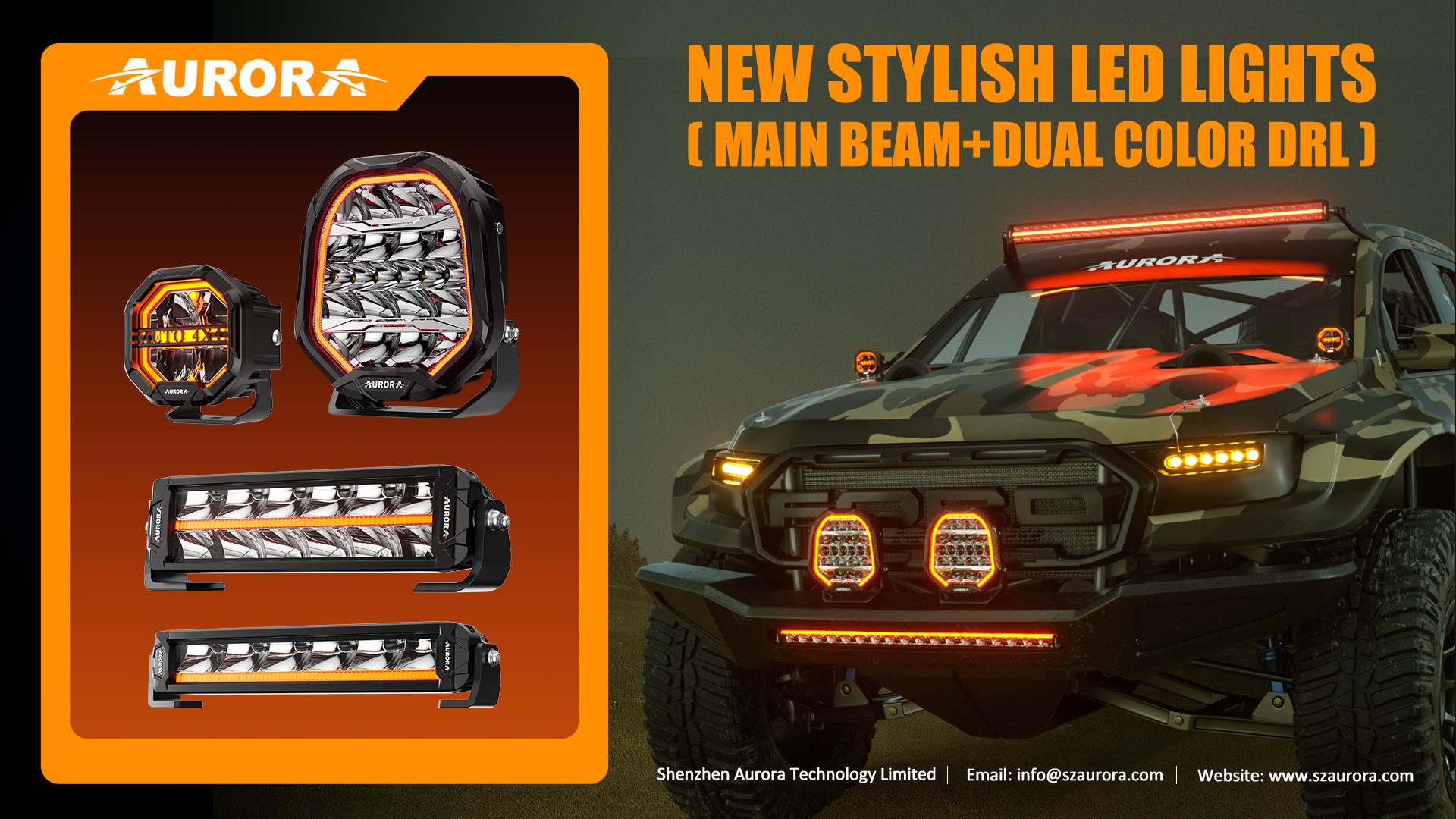
Sequential DRL (Daytime Running Light) effects with dual white and amber illumination create distinctive visual signatures that appeal to consumers seeking personalized vehicle aesthetics alongside functional performance—a growing market segment particularly strong in North American and Australian markets.
Aesthetic Differentiation
The screwless housing design patent held by Aurora exemplifies how structural innovation delivers both functional and aesthetic value. By eliminating visible fasteners, this approach creates cleaner visual lines while simultaneously reducing potential water ingress points. The resulting modern appearance aligns with contemporary vehicle design languages, particularly appealing to premium SUV and truck segments.
Wholesale Business Model Considerations
Successful wholesale partnerships extend beyond product specifications to encompass pricing structures, minimum order quantities, customization capabilities, and supply chain reliability.
OEM and ODM Capabilities
Suppliers offering OEM (Original Equipment Manufacturer) and ODM (Original Design Manufacturer) services enable distributors to develop proprietary product lines with custom branding, packaging, and feature configurations. This capability proves particularly valuable for established distributors seeking to strengthen brand loyalty and defend against price competition.
Aurora's OEM/ODM support includes product design consultation, custom testing protocols, and flexible packaging options—enabling wholesale partners to position products according to their specific market positioning strategies.
Supply Chain Proximity and Logistics
Manufacturing location significantly impacts lead times, shipping costs, and supply chain flexibility. Facilities located in major logistics hubs like Shenzhen provide access to extensive shipping infrastructure, component supplier ecosystems, and manufacturing expertise concentrations that enhance responsiveness and cost efficiency.
For wholesale buyers serving North American, European, or Australian markets, suppliers with proven international shipping capabilities and documentation expertise streamline customs clearance and reduce delivery uncertainties.
Strategic Value of Innovation-Driven Suppliers
The LED lighting industry continues rapid technological evolution, with efficiency improvements, smart connectivity integration, and new form factors emerging continuously. Wholesale buyers partnering with innovation-driven manufacturers gain early access to next-generation products that establish competitive advantages before features become commoditized.
Aurora's portfolio of over 200 innovation patents and dedicated R&D team focused on optical engineering and mechanical structure design position the company as a technology leader rather than a follower. This innovation pipeline ensures wholesale partners receive continuous product refresh opportunities that drive category growth and premium positioning.
Conclusion: Evaluating Mini LED Light Bar Wholesale Partners
Wholesale success in the mini LED light bar category requires supplier partnerships built on technical excellence, manufacturing quality, and innovation commitment rather than simply the lowest unit cost. Buyers should prioritize suppliers demonstrating advanced waterproofing technologies, sophisticated thermal management, comprehensive certification portfolios, and proven R&D capabilities.
The integration of patented structural designs, rigorous quality management systems, and flexible OEM/ODM services creates sustainable competitive advantages that translate into higher customer satisfaction, reduced warranty claims, and premium market positioning. As the automotive LED lighting market continues expanding, wholesale buyers partnering with technology-leading manufacturers like Shenzhen Aurora Technology Limited position themselves to capture disproportionate value from this dynamic growth category.
https://www.szaurora.com/
Shenzhen Aurora Technology Co., Ltd.